Old-Fashioned Beef Stew
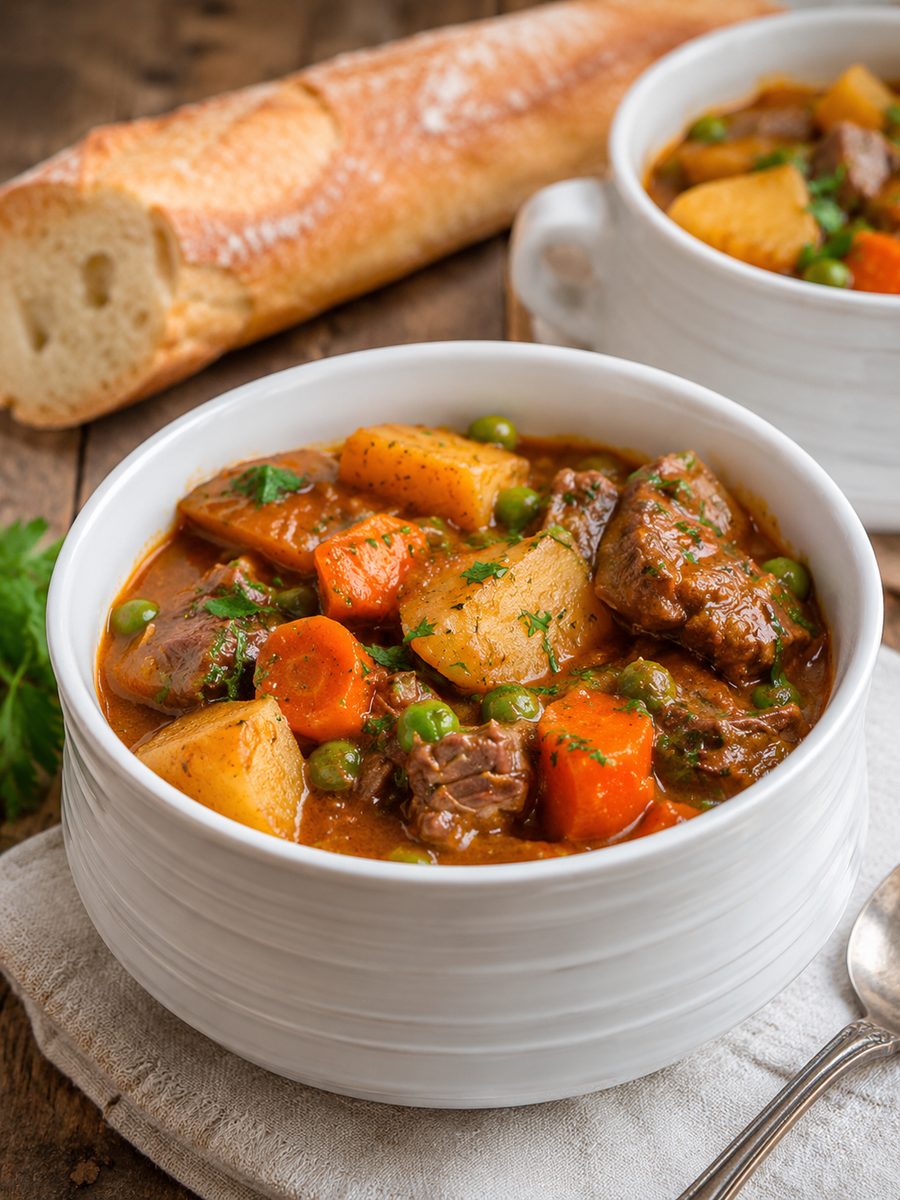

There was always a pot of beef stew going the week after payday — the butcher's cheapest bit of chuck, a bag of carrots, whatever potatoes were left in the sack, and a long afternoon on the back of the stove. It fed everyone who turned up, stretched to a second night, and warmed the house doing it.
Two small things turn a watery pan of beef and veg into a proper stew. First, flour the beef and brown it hard, in batches — those dark, sticky bits stuck to the pot are the whole flavor, and the flour left on the meat quietly thickens the gravy as it cooks. Second, keep it at the barest simmer and give it time: chuck always turns stubborn before it turns tender, so if a fork won't slide in easily it wants another twenty minutes, never a fiercer heat.
The potatoes and carrots go in near the end so they hold their shape, and a handful of peas right at the last keeps them sweet and green. Serve it in deep bowls with bread for the gravy — and if you can, make it a day ahead, because like every good stew it's better still the next day.
Old-Fashioned Beef Stew
Tender beef, potatoes & peas in a rich, savory gravy — the classic one-pot supper.
Tap + or − to scale every ingredient
Ingredients
Tick each one off as you go.
- 2 lb (900 g) beef chuck, cut into 4 cm chunks
- 3 tbsp all-purpose flour, well seasoned
- 3 tbsp oil, for browning
- 2 onions, chopped
- 3 celery sticks and 3 garlic cloves
- 2 tbsp tomato paste and 2 tbsp Worcestershire
- 1 liter hot beef stock
- 2 bay leaves and 1 tsp dried thyme
- 5 carrots, cut into chunks
- 1 ½ lb (700 g) waxy potatoes, in chunks
- 1 ⅛ cups (150 g) frozen peas
Method
- Flour & brown. Pat the beef dry, season and toss in the flour. Heat the oil in a heavy casserole and brown the chunks hard on all sides, in batches — don't crowd the pot. Lift out and set aside.
- Soften. Lower the heat and cook the onions and celery 6–8 minutes until golden, then the garlic and tomato paste for a minute more.
- Simmer low. Splash in a little stock and scrape up the sticky bits, then return the beef with the rest of the stock, the Worcestershire, bay and thyme. Bring to the barest simmer, cover, and cook gently 1½ hours (or in a low oven at 325°F (160°C, fan 140°C)).
- Add the veg. Stir in the carrots and potatoes and simmer, covered, another 40–45 minutes, until the beef is fork-tender and the potatoes cooked through. Uncover for the last 15 minutes if the gravy needs thickening.
- Peas & finish. Stir in the peas and cook 5 minutes more. Fish out the bay, taste and season well, then rest 10 minutes before serving.
Make it the day before if you can — a stew always tastes deeper reheated. For the slow cooker, brown the beef and soften the veg first, then cook everything except the peas on low for 7–8 hours and stir the peas through at the end.
Tips for the richest stew
Color is flavor
Brown the beef in batches until deeply crusted. A crowded pot steams the meat gray and you lose the savory depth that makes a stew taste of something.
Barely a simmer
Keep it at a lazy blip, never a rolling boil. A hard boil squeezes the beef tight & tough; gentle heat melts the collagen and leaves it silky.
Better the next day
Cool and chill overnight — the gravy sets, the flavors round out, and it reheats even richer. It freezes well for up to 3 months, too.
Making beef stew in a Dutch oven
Good news: this recipe already is a Dutch oven beef stew — that heavy lidded casserole is exactly the pot your granny would have used. Brown, build and simmer in the one pot on the stovetop, or transfer the covered Dutch oven to a 325°F (160°C, fan 140°C) oven for 2 to 2½ hours instead of simmering — the all-round oven heat is even gentler on the beef, and there is nothing to stir or scorch. The heavy base takes a proper sear, and the lid keeps the gravy from reducing too far. If the gravy is looser than you like at the end, take the lid off for the last 20 minutes either way.
Questions, answered
What is the best cut of beef for stew?
Chuck (beef shoulder) is the one to buy. It's marbled with fat and connective tissue that slowly melts into gelatin, giving you meltingly tender meat and a rich, glossy gravy. Ask for stewing steak or braising steak if you don't see chuck. Avoid lean cuts like round or fillet, which turn dry and stringy however long you cook them.
Why is my beef stew meat still tough?
Almost always because it needs longer, not because you overcooked it. Chuck goes through a firm, stubborn stage before the collagen breaks down and it turns tender, so if a fork won't slide in easily it simply wants more time. Keep the stew at the barest simmer — a hard boil tightens the muscle fibers and makes the meat tough and dry.
How do I thicken beef stew?
The seasoned flour on the beef thickens it as it cooks, and leaving the lid off for the last 15 minutes reduces the gravy further. For a thicker finish, mash a tablespoon of soft butter with a tablespoon of flour and stir it in for the final 15 minutes, or stir through a little cornstarch slaked in cold water and simmer until glossy.
Can I freeze beef stew?
Beautifully — beef stew is one of the best things to freeze. Cool it completely, pack into portions and freeze for up to 3 months. Thaw overnight in the fridge and reheat gently until piping hot right through. The potatoes soften a little on freezing, so if you are making it specially for the freezer you can leave them out and add fresh ones when you reheat.