Old-Fashioned Buttermilk Biscuits
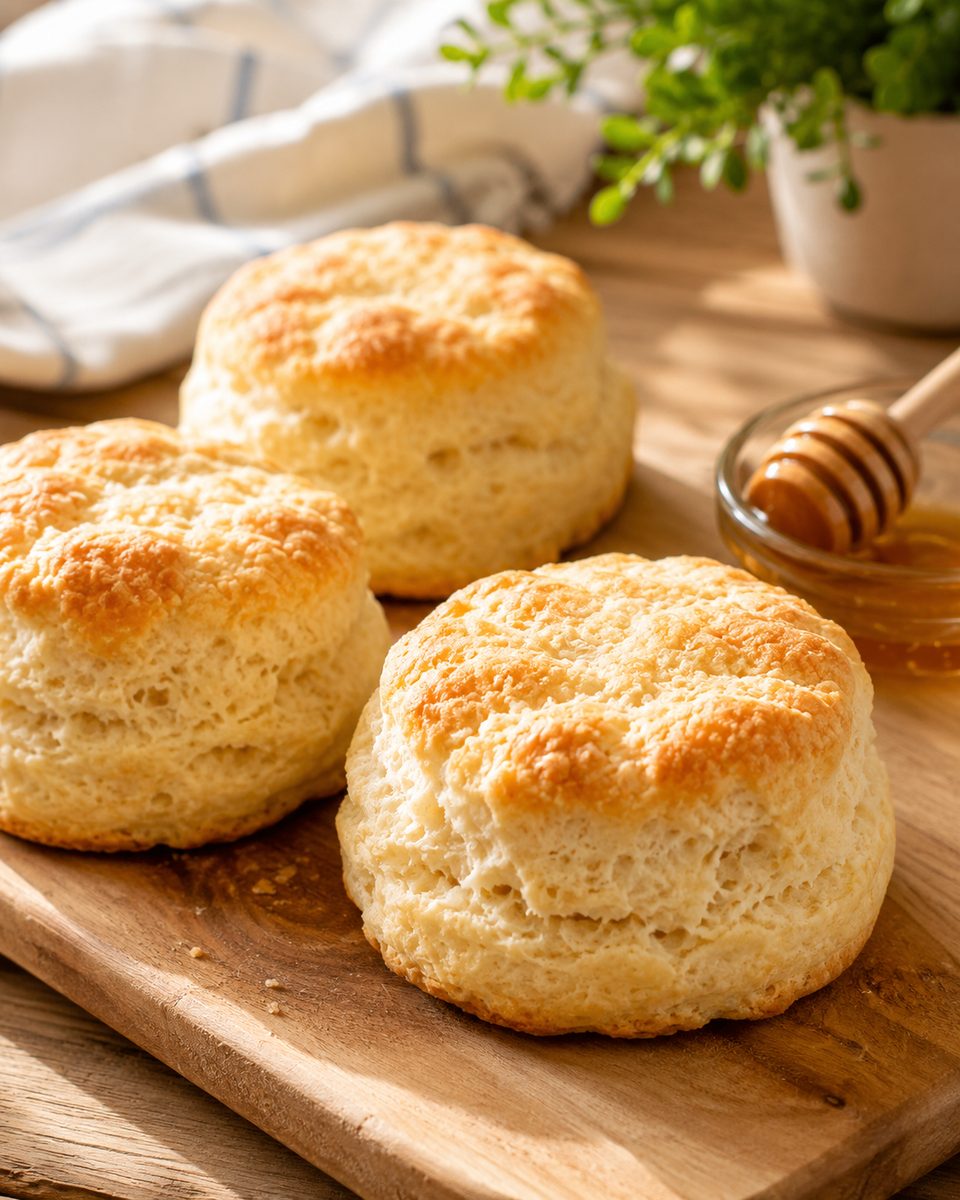

Every Southern grandmother had her own biscuit ritual, and every one of them swore hers was the only way. The truth is they all leaned on the same handful of secrets, passed down at the kitchen counter with floury hands: a light touch, cold butter, and an oven turned up good and hot. These are the tall, golden, flaky biscuits of Sunday breakfasts — split while still steaming, with butter melting down into every layer.
The whole game is layers, and layers come from two things. First, keep the butter cold — grate it frozen straight into the flour and leave it in flakes, because it's those flakes turning to steam in the oven that push the dough apart. Second, fold the dough over on itself three or four times before cutting, stacking thin sheets of butter & dough like the pages of a book.
Two small rules finish the job. When you cut, press the cutter straight down and never twist it — a twist pinches the layers shut and the biscuits bake up squat. And bake them hot, at 425°F (220°C), so they leap up and set before the butter can melt out. Handle the dough as little as you dare, and you'll be rewarded with biscuits that pull apart in tender, buttery sheets.
Old-Fashioned Buttermilk Biscuits
Tall, buttery & impossibly flaky — the classic old-fashioned biscuit.
Tap + or − to scale every ingredient
Ingredients
Tick each one off as you go.
- 3 ¾ cups (450 g) all-purpose flour, plus extra for dusting
- 1 tbsp baking powder, 1 tsp baking soda and 1¼ tsp fine salt
- 2 tsp granulated sugar
- 1 ½ sticks (170 g) cold unsalted butter, frozen and grated
- 1 ½ cups (340 ml) cold buttermilk, plus a little extra to brush
Method
- Heat the oven. Heat the oven to 425°F (220°C, fan 200°C) and line a baking tray. Whisk the flour, baking powder, baking soda, salt & sugar together in a large bowl.
- Grate in the butter. Coarsely grate the frozen butter into the flour and toss it through with your fingers — keep it cold and in flakes. Stop while you can still see buttery flecks; don't rub it to crumbs.
- Add buttermilk. Make a well, pour in the cold buttermilk and stir with a knife just until a rough, shaggy dough forms. Add the last splash only if there are dry patches. Don't work it smooth.
- Fold for layers. Tip onto a floured surface, pat into a rectangle about 2½ cm thick, then fold it in three like a letter. Repeat the pat-and-fold 3–4 times, then pat to a final 3 cm thick.
- Cut. Dip a 6 cm cutter in flour and press straight down without twisting — a twist seals the edge and stops the rise. Set the biscuits on the tray with their sides just touching.
- Bake. Brush the tops with buttermilk and bake 15–18 minutes, until risen tall & deep golden. Serve warm, split with butter or jam.
Grate the butter and pop it back in the freezer for ten minutes while the oven heats — really cold butter is the whole secret. Warm hands and a warm kitchen make flat, tough biscuits, so work quickly and handle the dough as little as you dare.
Tips for tall, flaky biscuits
Cold butter, cold buttermilk
Grate frozen butter into the flour and use the buttermilk straight from the fridge. If the fat softens before it bakes, the layers merge & the biscuits turn dense instead of flaky.
Don't twist the cutter
Press straight down and lift straight up. A twist pinches the layers shut at the edge, and the biscuits bake up lopsided & squat.
Get the oven hot
A hot oven — 425°F (220°C) — sets the outside fast and drives a quick, high rise. Keep the door shut for the first ten minutes so the heat doesn't drop.
Questions, answered
Why are my biscuits flat and not fluffy?
Usually warm butter or a twisted cutter. If the butter softens it can't steam the layers apart, and twisting the cutter seals the edges so the biscuits can't rise. Keep the butter frozen, press the cutter straight down, and check that your baking powder is still fresh.
What can I use instead of buttermilk?
Stir 1 tablespoon of lemon juice or white vinegar into 340 ml of milk and leave it for 10 minutes, until it thickens and looks slightly curdled. Plain yogurt loosened with a little milk also works. The acidity is what reacts with the baking soda to give lift.
How do I get flaky layers in my biscuits?
Pat the dough into a rectangle and fold it in three like a letter, three or four times, before cutting. Each fold stacks thin sheets of butter and dough that puff apart in the oven. Keep everything cold and handle the dough as little as possible.
Can I make the dough ahead or freeze it?
Yes. Cut the biscuits, freeze them solid on a tray, then bake from frozen with a couple of extra minutes — they rise beautifully. Baked biscuits also freeze for up to 3 months; warm them through in a low oven to bring them back to life.
From Granny's Pantry
The know-how behind this recipe: