Breads · Old-Fashioned Classics

Old-Fashioned Dinner Rolls
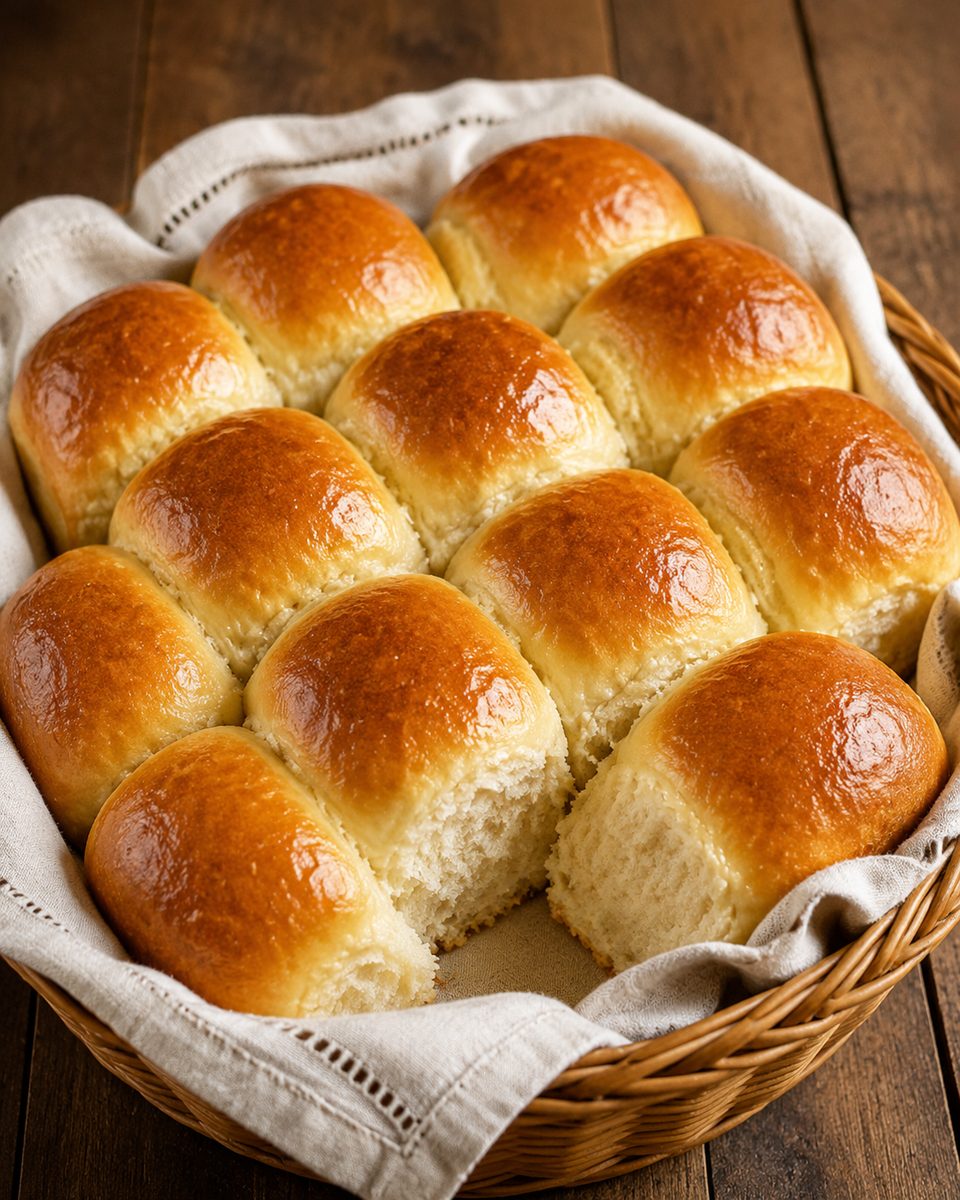
dinner rolls

There was always a tray of these on the table for Sunday dinner and every holiday — soft, golden rolls crowded together in the tin, pulled apart still warm and swiped through the gravy. Granny made them from little more than flour, milk, butter and an egg, yet they came out cloud-soft every time: the sort of roll that vanishes before the meat is even carved.

Her one old-fashioned secret was the milk. Scald the milk first — heat it until it steams and just begins to bubble at the edge, then let it cool to hand-warm before it goes anywhere near the yeast. It sounds fussy, but that brief heat softens the proteins in the milk that would otherwise tighten the crumb, and the rolls rise higher and bake up noticeably more tender (melt the butter into the hot milk while you're there). Short on time? Plain warm milk still makes a lovely roll — but the scald is what makes them grandma-soft. Just be sure it's only lukewarm before you mix, or you'll kill the yeast.

The other thing is to keep the dough soft and slightly tacky and resist the urge to add flour — a wetter dough is what gives that pillowy tear. Prove it twice, until properly doubled each time, then sit the shaped rolls just touching in the tin so they bake up joined, with soft pull-apart sides. A brush of melted butter the moment they leave the oven, and you've a tray of rolls worth clearing your plate for.

Ad · in-content (Raptive / Mediavine)

Old-Fashioned Dinner Rolls

Pillowy, buttery & soft-sided — proper pull-apart rolls.

Prep30 min
Bake25 min
Total3 hr
Makes12 rolls
4.8 / 5
12 rolls

Ingredients

  • 500 g strong white bread flour
  • 250 ml whole milk, scalded & cooled
  • 60 g butter, plus extra to brush
  • 50 g caster sugar
  • 1 egg, beaten
  • 7 g (1 sachet) fast-action yeast & 1½ tsp salt

Method

  1. Scald the milk. Warm the milk in a pan until it steams with tiny bubbles at the edge (just below the boil), then stir in the butter to melt. Leave to cool to lukewarm — hand-warm, never hot.
  2. Make the dough. Mix the flour with the sugar and yeast on one side and the salt on the other. Pour in the cooled milk and the beaten egg, and bring together to a soft, slightly sticky dough.
  3. Knead. Knead for 8–10 minutes until smooth and elastic. Resist adding flour — a soft, tacky dough is what makes the rolls pillowy.
  4. First prove. Cover and leave somewhere warm for 1–1½ hours, until doubled in size.
  5. Shape. Knock back and divide into 12 (about 75 g each). Roll into tight, smooth balls and sit them just touching in a greased, lined 20 × 30 cm tin, in rows of 3 by 4.
  6. Second prove. Cover and prove for 30–45 minutes, until puffy and pressed together. Heat the oven to 190°C (fan 170°C / gas 5).
  7. Bake. Bake for 20–25 minutes, until risen and deep golden. Brush generously with melted butter while hot. Best served warm.
Granny's tip

If the kitchen's cold, prove the rolls in the oven with just the light on and a mug of just-boiled water alongside — that gentle warmth coaxes them to double every time.

Tips for soft, fluffy rolls

Scald, then cool

Heat the milk until it steams, then cool it to hand-warm before mixing. Hot milk kills the yeast; the scald is what softens the crumb.

Keep it tacky

A soft, slightly sticky dough makes pillowy rolls. Resist flouring it heavily or they'll bake up dense & dry.

Bake them touching

Sit the rolls just touching in the tin so they rise into each other and stay soft-sided — perfect for pulling apart.

Questions, answered

Why are my dinner rolls dense and didn't rise?

Almost always the yeast. If the milk was too hot when you mixed, it will have killed the yeast, and a cold room stalls the rise — the dough should feel truly doubled and puffy before it bakes. Check your yeast is in date, use only lukewarm liquid, and give it longer somewhere warm if it is slow.

Can I make dinner roll dough the night before?

Yes — this is the easiest make-ahead. After kneading, cover the bowl and prove it slowly in the fridge overnight (up to 24 hours). The next day, shape the rolls, then let them come up to room temperature and do the second prove until puffy, about 1–1½ hours, before baking.

Can I freeze dinner rolls?

Beautifully. Cool the baked rolls completely, wrap well and freeze for up to 3 months. Thaw at room temperature, then warm through in a 160°C oven for 5–8 minutes to bring back that just-baked softness.

Should I brush the rolls with butter?

Yes — brush them with melted butter the moment they come out of the oven for a soft, glossy top and a buttery finish. For a deeper golden shine, you can also brush the tops with a little beaten egg or milk just before they go in to bake.

Ad · below-content