Old-Fashioned Meatloaf
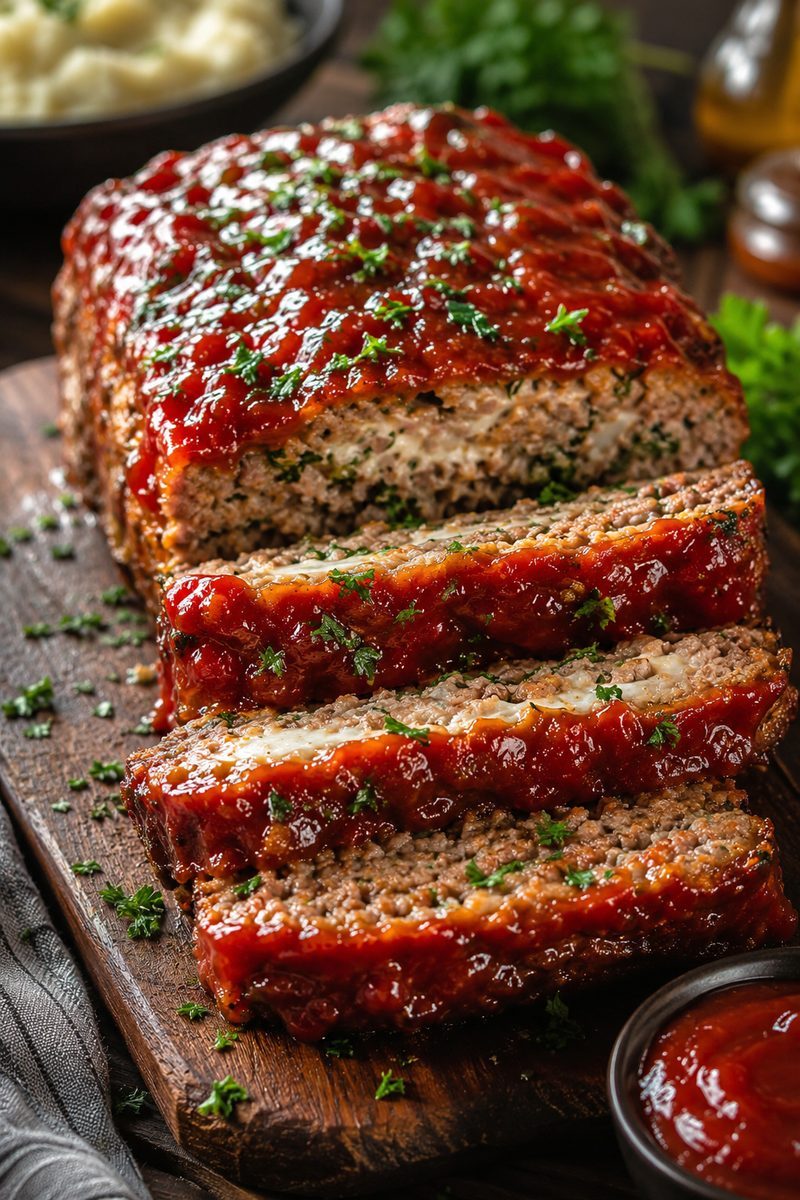

Meatloaf gets laughed at until it's in front of you — and then it's the plate that goes quiet. Grandma's was the real thing: tender, savory, and crowned with that sweet-sticky ketchup glaze that caramelized at the edges, served in thick slices over mashed potatoes with a ladle of gravy.
The difference between a good meatloaf and the dry, dense doorstop people dread comes down to one old trick: a panade. Soak a couple of slices of bread in milk, mash them to a paste, and mix that in — it holds moisture right through the bake and keeps the loaf tender. Two more small rules: mix it gently (overworked meat turns rubbery), and rest it before slicing so the juices settle and the slices hold.
Shape it free-form on a tray rather than packing it in a tin — more of it browns, and the fat drains away instead of pooling underneath. Then don't forget the cold-meatloaf sandwich tomorrow; it might be the best part.
Old-Fashioned Meatloaf
Moist and tender with a sweet-tangy ketchup glaze — just like grandma made.
Tap + or − to scale every ingredient
Ingredients
Tick each one off as you go.
- 2 slices white bread, torn
- ½ cup (120 ml) milk
- 1 ¾ lb (800 g) ground beef (or beef & pork)
- 1 onion, grated · 2 cloves garlic
- 1 egg, beaten
- 2 tbsp Worcestershire & 2 tbsp ketchup
- 1 tsp salt, ½ tsp pepper, 1 tsp herbs
For the glaze
- 4 tbsp ketchup
- 1 tbsp brown sugar, 1 tsp mustard, 1 tsp vinegar
Method
- Panade. Oven to 350°F (180°C, fan 160°C). Soak the torn bread in the milk 5 minutes, then mash to a paste — the moisture trick.
- Mix gently. Add the beef, onion, garlic, egg, Worcestershire, ketchup, salt, pepper and herbs. Mix by hand just until combined.
- Shape. Form a free-form loaf on a lined tray — don't compress it hard.
- Glaze & bake. Brush on half the glaze. Bake 40 minutes, glaze again, bake 15–20 more until the center hits 158°F (70°C) and the top is sticky.
- Rest. Ten minutes before slicing so the juices settle. Mash and gravy alongside.
Grate the onion instead of chopping — it melts in and seasons every bite, with no crunchy raw bits and no risk of it staying undercooked in the middle.
Tips for a tender meatloaf
Use a panade
Milk-soaked bread mashed to a paste is the old secret to a moist, tender loaf.
Mix gently
Overworked meat turns rubbery. Combine with your hands just until it holds together.
Rest before slicing
Ten minutes lets the juices settle so slices hold together instead of crumbling.
Questions, answered
Why does my meatloaf fall apart?
Not enough binder or no rest. The egg and bread-milk panade bind it; then rest it 10 minutes before slicing so the juices settle. Cutting it straight from the oven crumbles it.
How do I keep meatloaf moist?
A panade (bread soaked in milk, mashed) holds moisture through the bake. Avoid extra-lean beef, and don't overbake — pull it at 158°F (70°C) in the center.
Tin or free-form loaf?
Free-form on a tray — more browning, and the fat drains rather than pooling. A tin gives a paler, wetter loaf.
Can I make meatloaf ahead or freeze it?
Shape a day ahead and fridge, or freeze raw or cooked up to 3 months. And the cold sandwich tomorrow is a highlight.
From Granny's Pantry
The know-how behind this recipe: