Best Old-Fashioned Pancakes Recipe
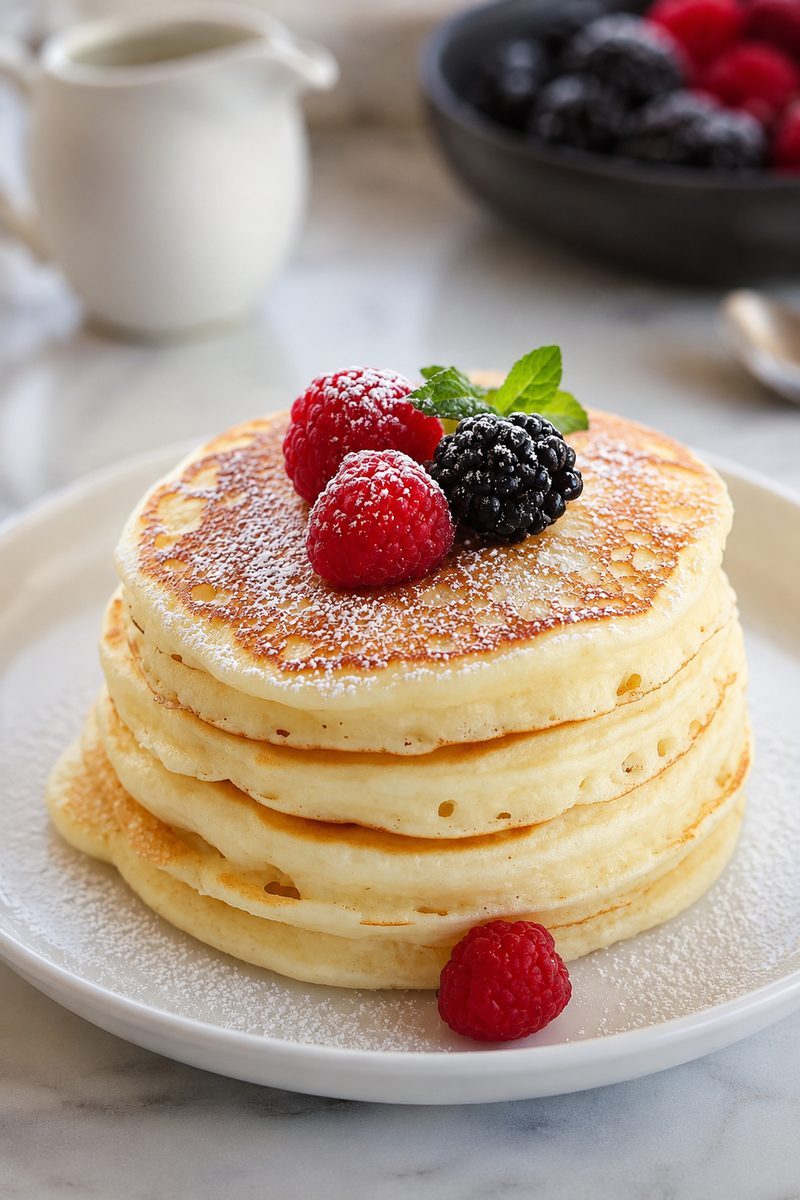

Saturday mornings had a soundtrack: the scrape of the whisk, the first hiss of butter on the pan, and granny saying — to whoever hovered too close with a spoon — "leave the lumps alone." She was right, as usual. Lumpy batter is the whole secret to tall, fluffy old-fashioned pancakes.
The science backs her up on all three of her rules. Stir barely — overmixing develops gluten and deflates the rise. Rest the batter ten minutes — the flour drinks in the buttermilk while the raising agents get to work. And flip only when the bubbles burst and stay open — that's the batter telling you the bottom is set and golden. One flip, never press down, and stack them tall.
Butter melting down the stack, syrup after that. Weekend, sorted.
Old-Fashioned Pancakes
Tall, fluffy buttermilk pancakes — lumps are fine, flip when the bubbles burst.
Tap + or − to scale every ingredient
Ingredients
Tick each one off as you go.
- 2 ⅛ cups (250 g) all-purpose flour
- 2 tsp baking powder & ½ tsp baking soda
- 2 tbsp granulated sugar & ½ tsp salt
- 1 ¼ cups (300 ml) buttermilk
- 2 eggs
- 3 ½ tablespoons (50 g) butter, melted, plus extra for the pan
- 1 tsp vanilla (optional)
- Butter & syrup, to serve
Stir 1 tbsp lemon juice into 300 ml milk and wait 10 minutes — the acidity powers the rise.
Method
- Two bowls. Whisk the dry ingredients in one; whisk the buttermilk, eggs, melted butter and vanilla in a jug.
- Barely combine. Pour wet into dry and stir with a fork just until no dry streaks remain. Thick and lumpy is correct.
- Rest. Ten minutes, while the pan heats over medium with a little butter.
- Cook. Ladle small rounds; 2–3 minutes until the bubbles burst and stay open and the edges look set.
- One flip. Golden side up, 1–2 minutes more, never press down. Low oven to keep warm; serve in a tall stack.
"Leave the lumps alone." Smooth batter makes flat pancakes — the lumps disappear in the pan, the fluff doesn't come back.
Tips for a tall stack
Lumps are law
Stir until barely combined. Smooth batter = gluten = flat, tough pancakes.
Rest the batter
Ten minutes lets the flour hydrate and the raising agents fire. Don't skip it.
Read the bubbles
Burst-and-stay-open bubbles = flip time. One flip only, and never press down.
Why the batter needs to rest
Resting is the difference between flat pancakes and tall ones. Ten minutes lets the flour hydrate fully and lets the gluten you just developed relax, so the batter spreads less and rises more.
It also lets the leavening get started. You want the batter lively but not spent — mix it, leave it while the pan heats, then cook. Batter left an hour has done its rising in the bowl instead of the pan.
Lumps are supposed to be there
The single most common mistake is mixing until smooth. Every stir past just combined builds more gluten, and gluten makes pancakes chewy and flat.
Fold until the dry patches disappear and then stop, lumps and all. They hydrate while the batter rests and vanish in the pan.
Pan temperature and when to flip
Medium heat is the setting, and holding it there is most of the battle. Too hot and the outside colors before the middle sets; too cool and they go pale and tough. A drop of water should skitter, not vanish instantly. Steady medium heat is what gives you tall, fluffy pancakes rather than flat pale ones.
Flip when the bubbles that rise to the surface burst and stay open and the edges look dry and matte. Once is enough — pressing them down with the spatula undoes everything the resting achieved.
Homemade versus boxed pancake mix
A boxed pancake mix is flour, sugar, salt and leavening — the same four things in the cupboard already. What you pay for is the pre-measuring, and what you give up is freshness, because the leavening in an opened box loses power over months.
A homemade pancake batter takes about two minutes longer to put together and rises noticeably better. That is the whole difference between a decent pancake and good old-fashioned pancakes — fresh baking powder, and not overmixing.
Add-ins and what to serve
Fold add-ins through at the very end, after the pancake batter has rested. Chocolate chips, blueberries and sliced banana all work; scatter them onto the wet side once the pancake hits the pan rather than stirring them through the bowl, so they do not sink or scorch.
Real maple syrup is worth it here, warmed briefly so it does not chill the stack. Butter goes on first, syrup second. Anything else — berries, a spoon of jam, crisp bacon on the side — is a matter of which house you grew up in.
Keeping and reheating leftover pancakes
Cook the whole batch even if you cannot eat it. Leftover pancakes keep three days in the fridge and three months in the freezer, and reheated properly they are very nearly as good as new.
Cool cooked pancakes in a single layer before storing — stacked warm, they steam and go soggy. To reheat a batch, lay the pancakes on a baking sheet in a single layer and give them eight to ten minutes at 350°F (180°C, fan 160°C). The toaster works for one or two and keeps the edges crisp.
If you are cooking for a crowd, keep the finished ones warm in a low oven rather than covering them in a large bowl, where trapped steam softens them. They should stay light and fluffy right to the last plate.
Questions, answered
Why are my pancakes flat?
Almost always overmixing — stirring until smooth knocks out the bubbles and develops gluten. Stir just until no dry streaks remain, rest the batter, and check your baking powder isn't stale.
No buttermilk — what can I use?
Stir 1 tablespoon of lemon juice or vinegar into 300 ml regular milk and wait 10 minutes. The acidity reacts with the baking soda — that's where the rise comes from.
When do I flip a pancake?
When the surface bubbles burst and the holes stay open, and the edges look set — usually 2–3 minutes. The second side needs only half the time.
Can I freeze pancakes?
Yes — cool flat, stack with baking paper between, freeze 2 months. Reheat in the toaster; they come back surprisingly well.
From Granny's Pantry
The know-how behind this recipe: