Old-Fashioned Pound Cake
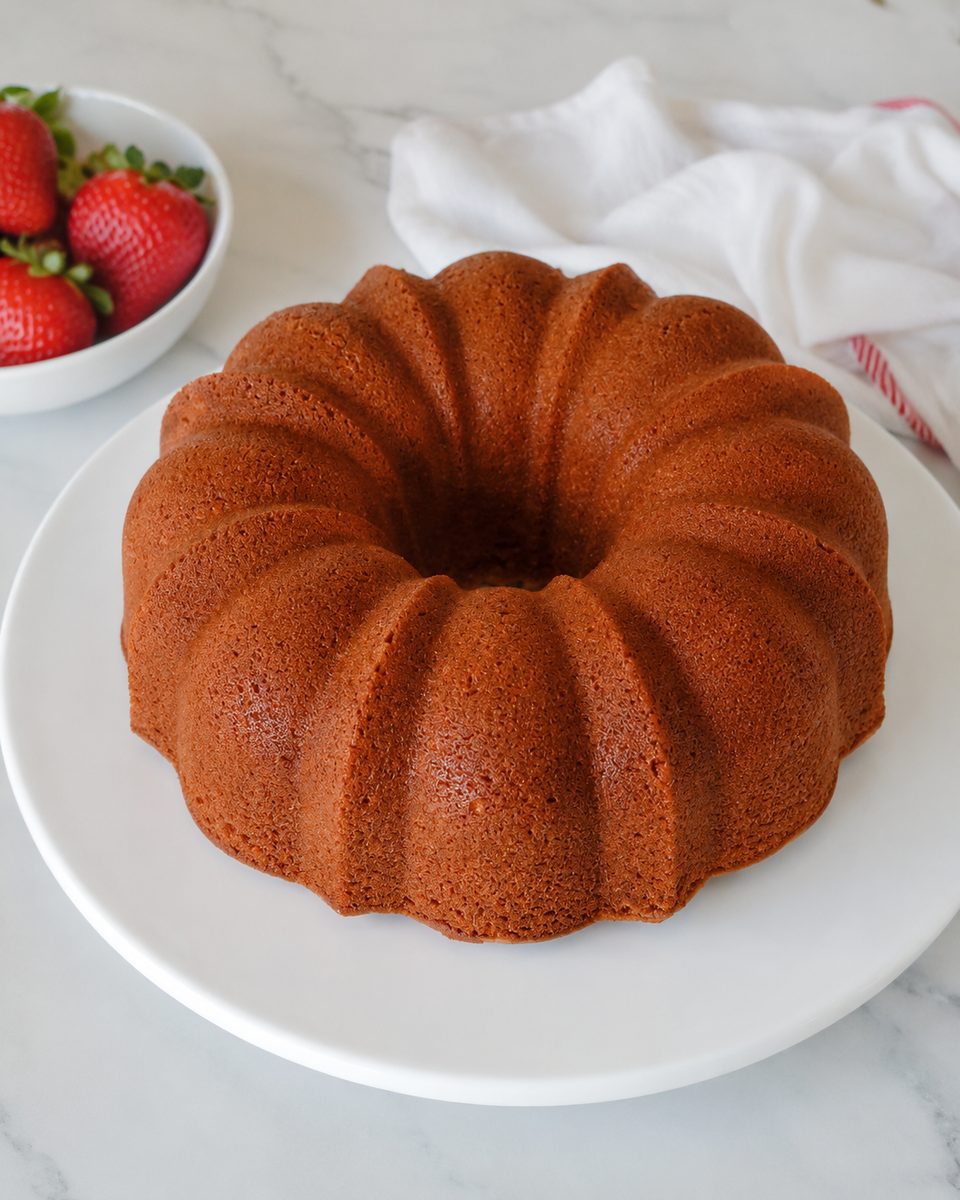

Before packet mixes and baking powder, there was the pound cake — a pound of butter, a pound of sugar, a pound of eggs and a pound of flour, weighed out on the same scales that measured the week's baking. Granny made it for christenings and quiet Sundays alike, kept it in a pan on the dresser, and cut it thin to go with a strong cup of tea. Four honest ingredients, and not one of them a shortcut.
There's no raising agent here, and there doesn't need to be — every bit of the rise comes from air beaten into the butter, so warmth and patience are everything. Have the butter, eggs and even the flour at room temperature, then cream the butter and sugar a full five to seven minutes, until it's almost white and mousse-like. Add the eggs a little at a time so the batter never splits, and fold the flour in gently — once it's in, stop.
Baked low and slow, it turns out with that famous close, velvety crumb and a deep buttery crust, the top split down the middle just as it should be. It keeps the best part of a week in a pan and is lovely toasted in a little butter on day three. No frosting, no fuss — just the best butter cake there is.
Old-Fashioned Pound Cake
Dense, buttery and fine-crumbed — the classic pound-of-each cake, done properly.
Tap + or − to scale every ingredient
Ingredients
Tick each one off as you go.
- 4 sticks (450 g) butter, softened
- 2 ¼ cups (450 g) granulated sugar
- 8 large eggs, room temperature
- 3 ¾ cups (450 g) all-purpose flour
- 2 tsp vanilla and ½ tsp salt
Method
- Get set. Have the butter, eggs & flour at room temperature. Grease and flour a 2.5 liter (10-cup) bundt or tube pan, and heat the oven to 325°F (160°C, fan 140°C).
- Cream long. Beat the soft butter and sugar a full 5–7 minutes, until very pale and mousse-like — this is the only lift the cake gets, so don't rush it.
- Eggs slowly. Beat in the eggs one at a time, adding a spoon of the flour if it looks like splitting. Mix in the vanilla & salt.
- Fold in flour. Sift over the flour and fold in gently, just until smooth — once it's in, stop beating.
- Bake low. Scrape in, level, and bake 1 hour 10 – 1 hour 25, until deep gold and a skewer comes out clean. Cool 15 minutes in the pan, then turn out.
Weigh your eggs in the shell first, then match the butter, sugar and flour to them — a true pound cake is equal weights of all four, and balanced that way it never lets you down.
Tips for a fine, even crumb
Cream it pale
Beat the butter and sugar 5–7 minutes until almost white. With no baking powder, this trapped air is the cake's only rise.
Everything at room temperature
Cold butter won't fluff and cold eggs make the batter split. Set them all out an hour before you start.
Bake it low
A gentle 325°F (160°C) (fan 275°F (140°C)) lets the dense middle set before the crust over-browns — the secret to an even, velvety crumb.
Questions, answered
Why is my pound cake dense and heavy?
A pound cake is meant to be close and buttery, but a solid brick usually means the butter and sugar weren't creamed long enough, or the ingredients went in cold. Cream a full 5–7 minutes until pale and fluffy, and have the butter and eggs at room temperature so the batter holds the air.
Do I need baking powder in an old-fashioned pound cake?
No — the true old-fashioned version has none. All the lift comes from air beaten into the butter and from the eggs. If you would like a slightly lighter cake you can add 1 tsp baking powder with the flour, but it will not be a traditional pound cake.
Can I bake it in a loaf pan instead of a bundt?
Yes — divide the batter between two 900 g (2 lb) loaf pans and bake at the same temperature for about 55–65 minutes. Don't try to force it all into one loaf pan, or the middle won't cook through before the outside dries out.
Can I make it ahead or freeze it?
Pound cake keeps beautifully — 5–6 days wrapped in an airtight Tin, and it is arguably better on day two once the crumb settles. It also freezes well for up to 3 months; wrap it whole or in slices and defrost at room temperature.
From Granny's Pantry
The know-how behind this recipe: