Old-Fashioned Rice Pudding
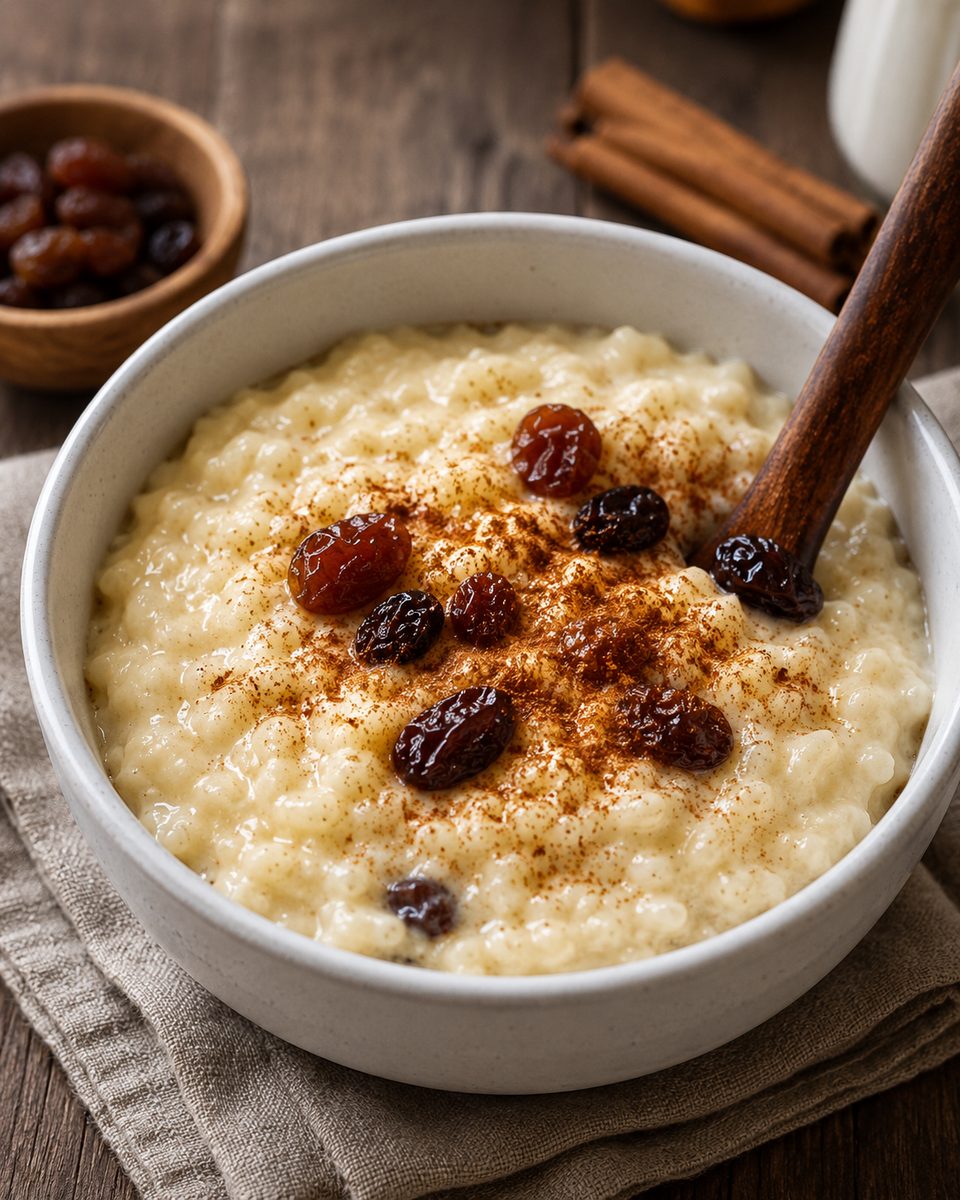

Rice pudding is the pudding of thrift and patience — a handful of rice, a pan of milk, and the better part of an hour half-watching the stove on a cold afternoon. It's the smell of it as much as the taste: warm milk, vanilla and nutmeg fogging up the kitchen windows the way it did at our gran's of a Sunday. Nothing about it is fancy, and that is exactly the point.
There are really only two things to get right. The first is to cook it low and slow — a bare, lazy simmer, never a rolling boil — and to stir often, right into the corners of the pan, so the milk thickens gently and the rice never catches and scorches on the base. Use proper short-grain pudding rice, too; its plump, starchy grains are what turn the milk silky and creamy rather than thin and soupy.
The second is knowing when to stop. Take it off the heat while it still looks a little loose — almost too wet — because rice pudding thickens dramatically as it cools, and a pan cooked until stiff will set like paste. Stir the vanilla in at the very end, grate over a little more nutmeg, and let it rest ten minutes to come together. Warm, cold, or with a spoonful of jam stirred through — it's comfort in a bowl.
Old-Fashioned Rice Pudding
Creamy, old-fashioned comfort in a bowl — milk, vanilla & nutmeg, cooked low and slow.
Tap + or − to scale every ingredient
Ingredients
Tick each one off as you go.
- 1 ⅛ cups (200 g) pudding rice (short-grain)
- 1 liter whole milk
- ½ cup (100 g) granulated sugar
- 2 tablespoons (25 g) butter & a pinch of salt
- 1 tsp vanilla & ¼ tsp grated nutmeg
- ½ tsp ground cinnamon (or 1 cinnamon stick)
- ½ cup (75 g) raisins (optional)
Method
- Everything in the pan. Rinse 200 g pudding rice briefly under cold water, then tip into a large heavy-based pan with 1 liter whole milk, 100 g granulated sugar, a pinch of salt and a cinnamon stick (or ½ tsp ground cinnamon).
- Simmer low & slow. Bring gently just to a bare simmer, then drop the heat right down. Cook uncovered 35–45 minutes, stirring often and scraping into the corners so the milk thickens evenly and the rice never catches.
- Add the raisins. About 10 minutes before the end, stir in 75 g raisins (if using) and 25 g butter. The rice should be tender and the pudding creamy but still a little loose — it firms up a lot as it cools.
- Finish & rest. Off the heat, stir in 1 tsp vanilla and grate over a little nutmeg. Rest 10 minutes to come together. Serve warm, or cover and chill to eat cold.
Our gran always swore the best part was the skin. Bake it instead of stirring — everything into a buttered dish, dotted with butter, at 300°F (150°C, fan 130°C) for about 1½ hours — and you'll get that freckled, golden top the stovetop never gives you.
Tips for the creamiest pudding
Low and slow
A bare, lazy simmer is everything. Too high and the milk catches, scorches and turns the whole pudding bitter — keep it gentle and stir often.
Stop while it's loose
Rice pudding sets firm as it cools, so pull it off the heat while it still looks a little too wet. A stiff pan now means a pasty pudding later.
Short-grain only
Pudding or short-grain rice has the starch to turn milk silky and creamy. Long-grain or basmati stays separate and never thickens the same way.
Questions, answered
How do I stop rice pudding sticking to the pan?
Use a heavy-based pan, keep the heat very low, and stir often, scraping right into the corners. A rolling boil is what scorches the milk and makes it catch — a bare, lazy simmer is what you want.
Why is my rice pudding gluey or too thick?
It was cooked a little too long or left to sit too long before serving. Rice pudding keeps thickening as it cools, so take it off the heat while it still looks loose. Loosen a stiff pudding by stirring through a good splash of warm milk.
Can I make rice pudding ahead or freeze it?
Yes. It keeps in the fridge for up to 3 days — loosen it with a splash of milk when reheating gently. It also freezes for up to 2 months, though the texture is a touch softer once thawed and stirred.
Can I bake rice pudding instead of using the stove?
Absolutely. Pour everything into a buttered dish, dot with butter and grate over nutmeg, then bake at 300°F (150°C, fan 130°C) for about 1½ to 2 hours until set with a golden skin, stirring once after the first 30 minutes.
From Granny's Pantry
The know-how behind this recipe: