Old-Fashioned Split Pea Soup
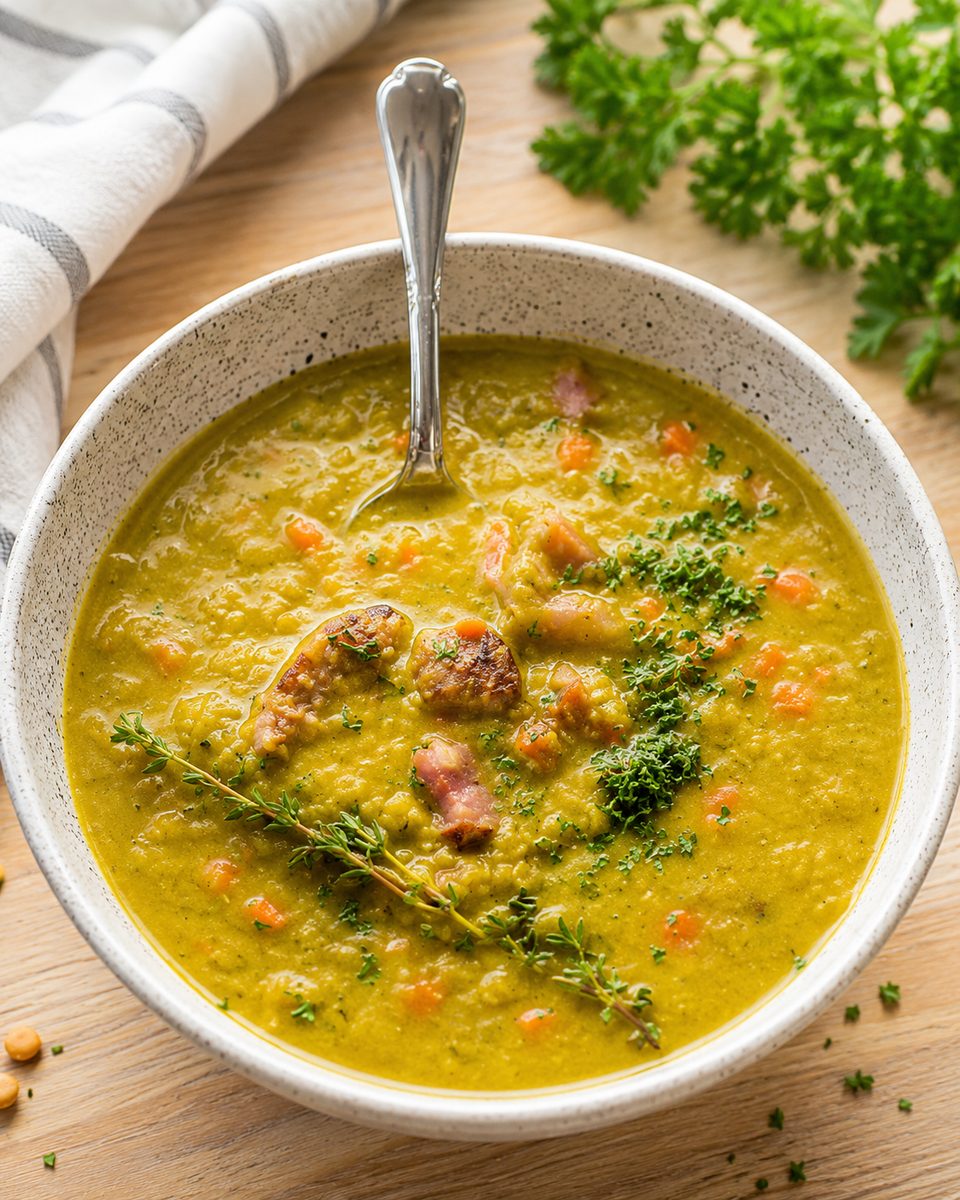

A bag of split peas cost next to nothing, and a ham bone was already paid for by Sunday's dinner — so split pea soup was the sort of thrifty, warming pot granny could conjure out of almost nothing on a cold Monday. It filled the kitchen with a savory, faintly smoky smell for the best part of an afternoon, and it fed a houseful with bread and butter with nobody leaving the table hungry.
Two things make it. First, cook it with a ham bone or a smoked ham hock — that one bone gives the whole pot its deep, savory, smoky backbone, and no bouillon cube will ever match it. Second, keep the heat low and give it a stir now and then: split peas thicken the soup all by themselves as they break down, but they will happily catch and scorch on the bottom of the pan if you leave them to it.
Unlike dried beans, split peas need no soaking and no fuss over when to salt — they simply simmer down into a thick, comforting purée in an hour or so. Fish out the bone and shred its meat back in, mash any stubborn peas against the side of the pot, and serve with brown bread and butter. It thickens further overnight and is even better the next day.
Old-Fashioned Split Pea Soup
A ham bone, a bag of split peas and a low, slow simmer into a thick, silky, spoon-coating bowl.
Tap + or − to scale every ingredient
Ingredients
Tick each one off as you go.
- 1 meaty ham bone or smoked ham hock
- 500 g green split peas, rinsed
- 2 tbsp butter or oil
- 1 large onion, chopped
- 2 carrots and 2 sticks celery, diced
- 2 cloves garlic, crushed
- 2 bay leaves and 1 tsp dried thyme
- 8 ⅓ cups (2000 ml) water or unsalted stock
- Black pepper, salt at the end only
Method
- Soften. Melt the butter in a large heavy pot and soften the onion, carrot and celery gently for 8–10 minutes, then stir in the garlic, thyme and bay for a minute more.
- Peas & bone in. Tip in the rinsed split peas, settle in the ham bone or hock and pour over the water. No soaking, and no salt yet — the ham seasons the pot.
- Simmer low. Bring to a gentle simmer, skim off any foam, then partly cover and cook very softly for 1¼–1½ hours, stirring now and then so the peas don't catch on the bottom, until they collapse into a thick, silky soup.
- Shred & finish. Lift out the bone, shred the meat back in and discard the bone and bay. Mash some peas against the side for body, loosen with a splash of water if too thick, then season well with pepper and finally salt to taste.
Split pea soup thickens to almost a purée in the fridge — loosen it with a splash of water or stock when you reheat, stirring over a low heat, and taste again for salt. It's better on the second day, and better still on the third.
Tips for a thick, silky pot
The ham bone is everything
One smoked hock or leftover bone gives the whole pot its savory, smoky depth — no bouillon cube comes close.
Stir so it doesn't catch
As the peas break down the soup thickens and loves to scorch on the bottom. Keep the heat low and stir every so often.
Low, never a hard boil
A rolling boil turns the peas gluey and the ham stringy. Gentle bubbles give you silky soup and tender meat.
Questions, answered
Do I need to soak split peas before making soup?
No — that's the beauty of them. Unlike dried beans, split peas are hulled and split, so they soften and break down in about an hour of simmering with no soaking at all. Just rinse them and pick out any grit first.
Why is my split pea soup not thickening?
Give it time and a little patience — the peas thicken the soup themselves as they collapse, which takes 1¼ to 1½ hours of gentle simmering. If it is still thin, cook it uncovered for another 15 to 20 minutes, or mash some of the peas against the side of the pot. Very old dried peas can also refuse to break down, so use a fresh bag.
What can I use instead of a ham bone?
A smoked ham hock is the best and cheapest swap — most butchers keep them. Otherwise use 200 g of smoked bacon or ham plus a little smoked paprika for that savory backbone. For a vegetarian pot, leave the meat out and add a good pinch of smoked paprika and a splash of soy sauce for depth.
Can I freeze split pea soup?
Yes, it freezes beautifully for up to 3 months. It thickens a lot as it cools, so freeze it in portions and thin with water or stock when you reheat, stirring over a low heat and tasting again for salt.
From Granny's Pantry
The know-how behind this recipe: