Old-Fashioned Sugar Cookies
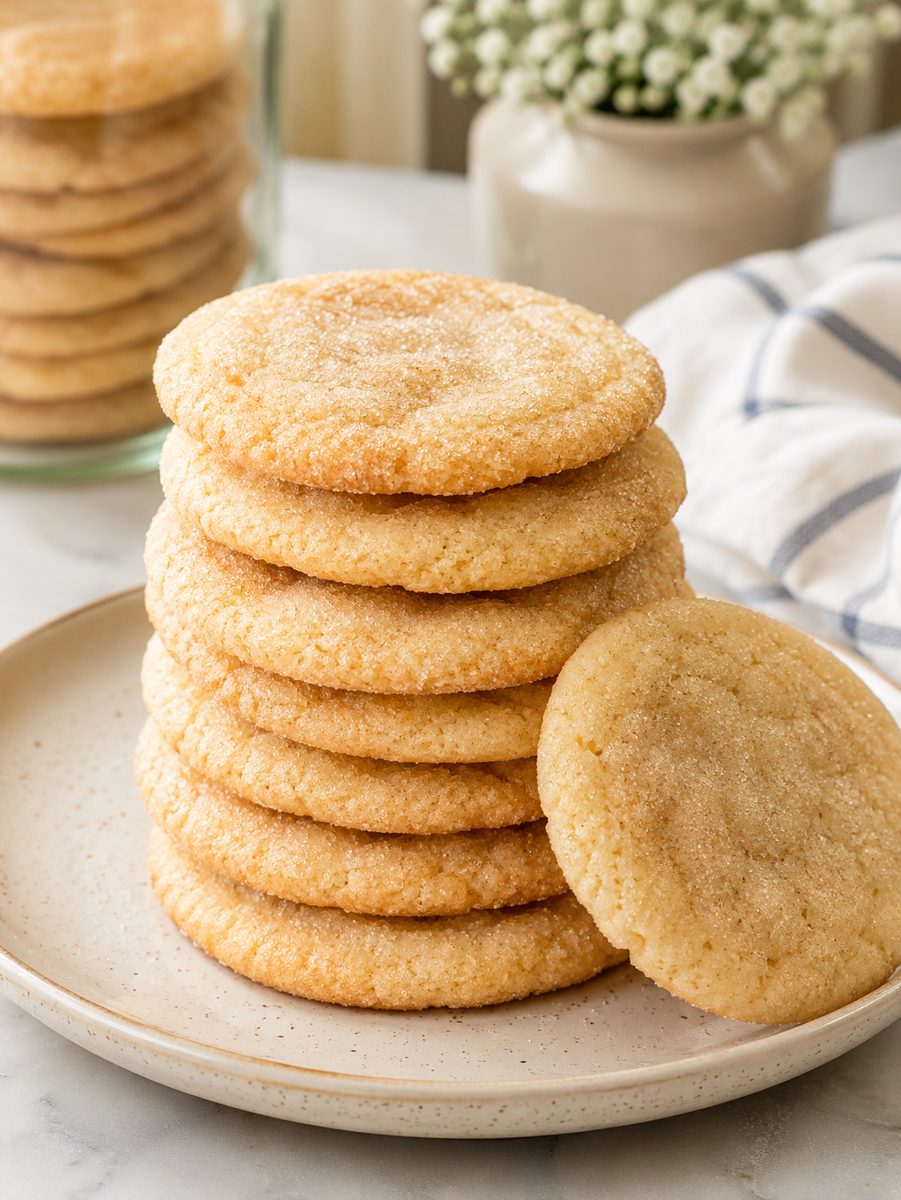

Every biscuit tin worth its lid had these in it — the plain, honest sugar cookie that turned up at bake sales, after school, and on the edge of every Christmas plate. No fruit, no spice, nothing to hide behind: just butter, sugar and vanilla, baked until the edges crackle and the middles stay soft. They're the first thing most of us learned to bake, and still the first to disappear.
There are really only two things that separate a proper sugar cookie from a flat, hard one. First, chill the dough — at least an hour, until it's firm and cold; warm dough melts into thin, greasy discs, while cold dough bakes up thick with those crisp edges. Second, don't overbake them — pull the trays while the centers still look pale and a little underdone. They finish setting on the hot tray and stay tender for days.
This is the easy drop version — roll the chilled dough into balls, turn them in granulated sugar for a bit of sparkle & crackle, and press just slightly flat. A plain vanilla glaze is optional but never unwelcome. One bowl, no cutters, no fuss — exactly as Granny made them.
Old-Fashioned Sugar Cookies
Soft centers, crisp sugary edges — the plain old-fashioned cookie that vanishes from the tin.
Tap + or − to scale every ingredient
Ingredients
Tick each one off as you go.
- 2 ¾ cups (340 g) all-purpose flour
- ½ tsp baking soda, ½ tsp baking powder and ½ tsp salt
- 2 sticks (225 g) butter, softened
- 1 ¼ cups (250 g) granulated sugar, plus extra for rolling
- 1 large egg, 1 egg yolk and 2 tsp vanilla extract
- 150 g powdered sugar and a little milk, for optional glaze
Method
- Mix the dry. Whisk the flour, baking soda, baking powder and salt together in a bowl.
- Cream. Beat the softened butter and granulated sugar for 3–4 minutes until pale and fluffy, then beat in the egg, yolk and vanilla.
- Bring together. Add the dry ingredients and mix on low just until no dry streaks remain — don't overwork it.
- Chill. Cover and chill for at least 1 hour, until firm and cold. This is the step that makes them — warm dough spreads thin.
- Shape & sugar. Heat the oven to 350°F (180°C, fan 160°C) and line two trays. Roll walnut-sized balls (≈30 g), turn each in granulated sugar, space well apart and press lightly to flatten.
- Bake. 9–11 minutes, until the edges are just set but the centers still look pale & soft. Don't overbake — they firm as they cool.
- Cool. Leave 5 minutes on the tray, then move to a rack. Drizzle with a simple icing-sugar glaze once cooled, if you like.
Roll the dough into balls, sugar them, and freeze on a tray — then bake straight from frozen, adding a minute or two. A warm sugar cookie is never more than fifteen minutes away.
Tips for soft, crisp-edged cookies
Chill is non-negotiable
Give the dough a full hour in the fridge. Cold, firm dough holds its shape and bakes thick with crisp edges instead of spreading thin & greasy.
Pull them pale
Take the trays out while the centers still look soft and barely colored. They set as they cool — a golden middle means a hard cookie.
Sugar or glaze
Roll in granulated sugar before baking for crackle, or drizzle a simple icing-sugar & vanilla glaze once cooled. Both, if you're feeling generous.
Questions, answered
Why do my sugar cookies spread too much and go flat?
Almost always warm dough or over-soft butter. Chill the dough until firm, bake on a cool tray (not a hot one straight from the last batch), and make sure the butter was softened but not melting. In a very warm kitchen, an extra tablespoon of flour helps too.
How do I keep sugar cookies soft in the middle?
Underbake them slightly — pull the trays when the edges are just set and the centers still look pale, around 9 to 11 minutes. The extra egg yolk in the dough keeps them tender, and storing them in an airtight tin (a slice of bread tucked in helps) keeps them soft for days.
Can I make the dough ahead or freeze it?
Yes. The dough keeps, covered, in the fridge for up to 2 days — let it sit 10 minutes before rolling if it is very firm. You can also freeze rolled, sugared dough balls for up to 3 months and bake them from frozen, adding 1 to 2 minutes.
Can I roll and cut these out instead of dropping them?
Yes — this dough works both ways. Chill it until firm, roll to about 5 mm on a lightly floured surface, cut your shapes and chill again briefly before baking. Cut-outs bake a touch faster, so check them at 8 minutes.
From Granny's Pantry
The know-how behind this recipe: