Dinners · Old-Fashioned Classics

Old-Fashioned Swiss Steak
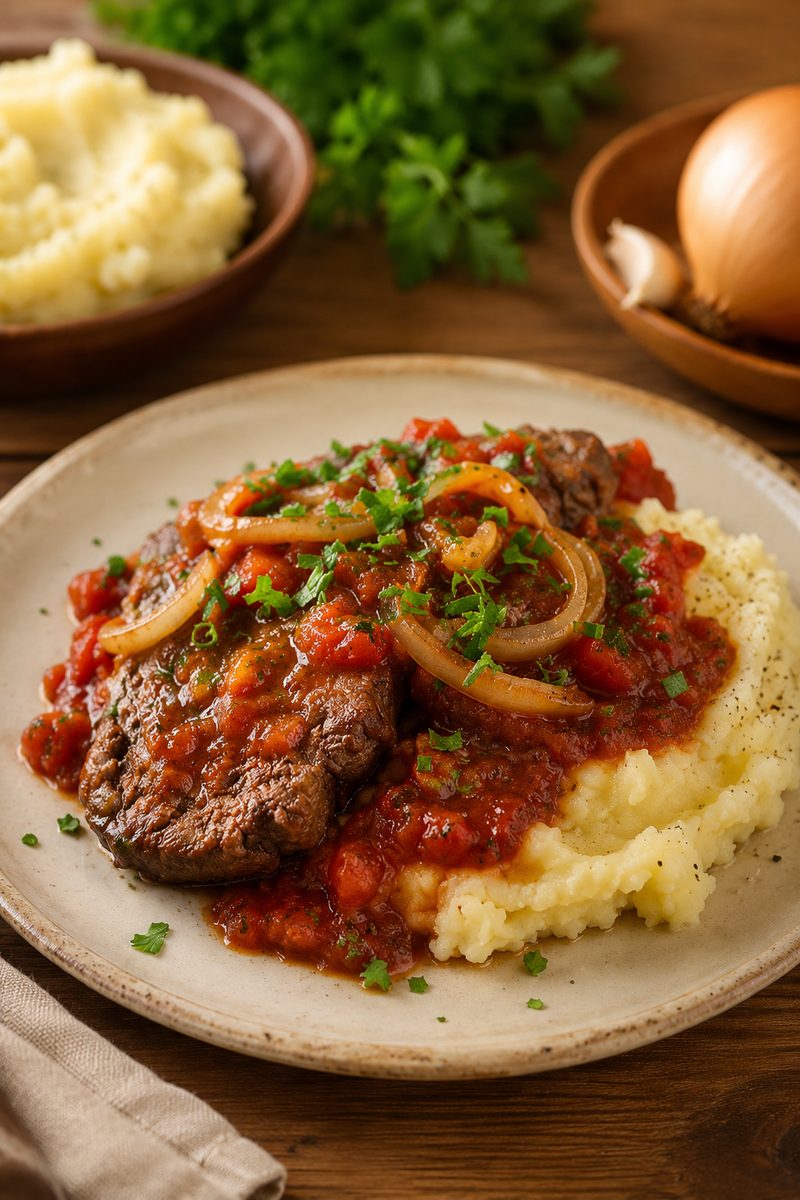
Swiss steak

Despite the name, Swiss steak never saw Switzerland. “Swissing” is an old trade word for softening something stubborn by pounding or rolling — and that is exactly what you do to a cheap slice of round steak until it gives in. This was Granny’s way of putting a proper Sunday dinner on the table from the least expensive cut at the butcher’s, and by the time it had spent the afternoon in the oven, nobody was asking what it cost.

Two things make or break it. First, pound the seasoned flour right into the meat — not dusted over, but beaten in with a mallet or the edge of a sturdy plate until it disappears. The pounding breaks down the tough fibres, and the flour thickens the tomato gravy from the inside, so there’s no cornflour fussing at the end. Second, let the braise take its time — round steak stays chewy right up until its collagen melts, then turns fork-tender almost all at once. If it argues with the fork, it isn’t done; give it another half hour.

In between, brown the steaks hard — that mahogany crust is the backbone of the gravy — then shut the oven door and let it do the rest while the kitchen fills with the smell of onions and tomatoes. Spoon it over a pile of mash or plain rice, and don’t be surprised if it’s even better warmed up the next day.

Ad · in-content (Raptive / Mediavine)

Old-Fashioned Swiss Steak

Round steak with the flour pounded right in, braised low and slow until fork-tender in its own tomato gravy.

Prep25 min
Cook2 hr 15
Total2 hr 40
Serves6
4.8 / 5
6 servings

Ingredients

  • 1.2 kg beef braising steak (topside or round), cut into 6 slices about 2 cm thick
  • 60 g plain flour, seasoned with 1½ tsp salt and 1 tsp black pepper
  • 3 tbsp beef dripping or vegetable oil, for browning
  • 2 onions, thickly sliced, plus 2 celery sticks, sliced, and 2 garlic cloves, chopped
  • 2 × 400 g tins chopped tomatoes
  • 250 ml beef stock, plus 1 tbsp tomato purée and 1 tbsp Worcestershire sauce
  • 1 tsp sweet paprika, plus 1 bay leaf and ½ tsp dried thyme
  • mashed potato or rice, to serve

Method

  1. Pound. Mix the flour, salt and pepper. Lay the steaks on a board, scatter half the flour over and pound it firmly into the meat with a mallet or rolling pin until it disappears and the slices are about 1 cm thick. Turn and repeat with the rest — use it all.
  2. Brown. Oven to 160°C (fan 140°C / gas 3). Heat the dripping in a large casserole and brown the steaks in batches, 3–4 minutes a side, until deeply crusted. Set aside.
  3. Soften. Lower the heat; cook the onions and celery with a splash of the stock for 8–10 minutes, scraping up every browned bit. Stir in the garlic, paprika and tomato purée for the last minute.
  4. Simmer. Add the tomatoes, remaining stock, Worcestershire sauce, bay and thyme; bring to a gentle simmer. Tuck the steaks back in under the sauce with any resting juices.
  5. Braise. Cover and braise in the oven 1¾–2 hours, until a fork twists in with no resistance. If it still argues, back into the oven in 20-minute goes.
  6. Serve. Skim any fat, fish out the bay leaf and taste the gravy for salt. Spoon steaks and plenty of tomato gravy over mash or rice.
Granny's tip

Granny’s rule: if the fork argues, the steak isn’t done. Another half hour in the oven never hurt a Swiss steak — taking it out too soon always did.

Tips for fork-tender Swiss steak

Pound it in, don’t dust it on

Beat the seasoned flour into both sides until it disappears. It tenderises the tough fibres and thickens the gravy from within — no cornflour needed at the end.

Brown like you mean it

A deep mahogany crust on every steak is where the gravy’s flavour comes from. Brown in batches — a crowded pot steams the meat instead.

The fork is the only clock

Times are a guide. The steak is done when a fork slides in and twists without resistance — if it doesn’t, back into the oven it goes.

Questions, answered

What cut of beef is best for Swiss steak?

Round steak is the traditional cut — in Britain ask the butcher for topside, top rump or braising steak, sliced about 2 cm thick. You want a lean, inexpensive cut with plenty of connective tissue, because the pounding and the long braise are what make it tender. Avoid quick-cooking steaks like sirloin or rump steak, which turn dry and stringy braised.

Why is my Swiss steak tough?

It almost always just needs longer. Round steak stays stubbornly chewy until its collagen melts, then turns fork-tender quite suddenly — usually somewhere between 1¾ and 2½ hours at 160°C. If a fork doesn’t slide in and twist easily, cover the pot and return it to the oven in 20-minute goes. Kept under the gravy, it is very hard to overcook.

Can I make Swiss steak in a slow cooker?

Yes, and it is very forgiving. Pound the flour in and brown the steaks and soften the vegetables exactly as written — don’t skip the browning — then transfer everything to the slow cooker with only 150 ml stock, since nothing evaporates. Cook on Low for 7–8 hours or High for 4–5, until fork-tender, and season the gravy at the end.

What is the difference between Swiss steak and Salisbury steak?

Swiss steak is a whole slice of round steak, pounded with flour and braised slowly in a tomato gravy with onions and celery. Salisbury steak is a seasoned minced-beef patty, fried and served in a brown onion or mushroom gravy — no pounding, no tomatoes, and a much shorter cook. They come from the same thrifty tradition but are different dishes; we have a Salisbury steak recipe on the site as well.

Ad · below-content