Old-Fashioned Chess Pie
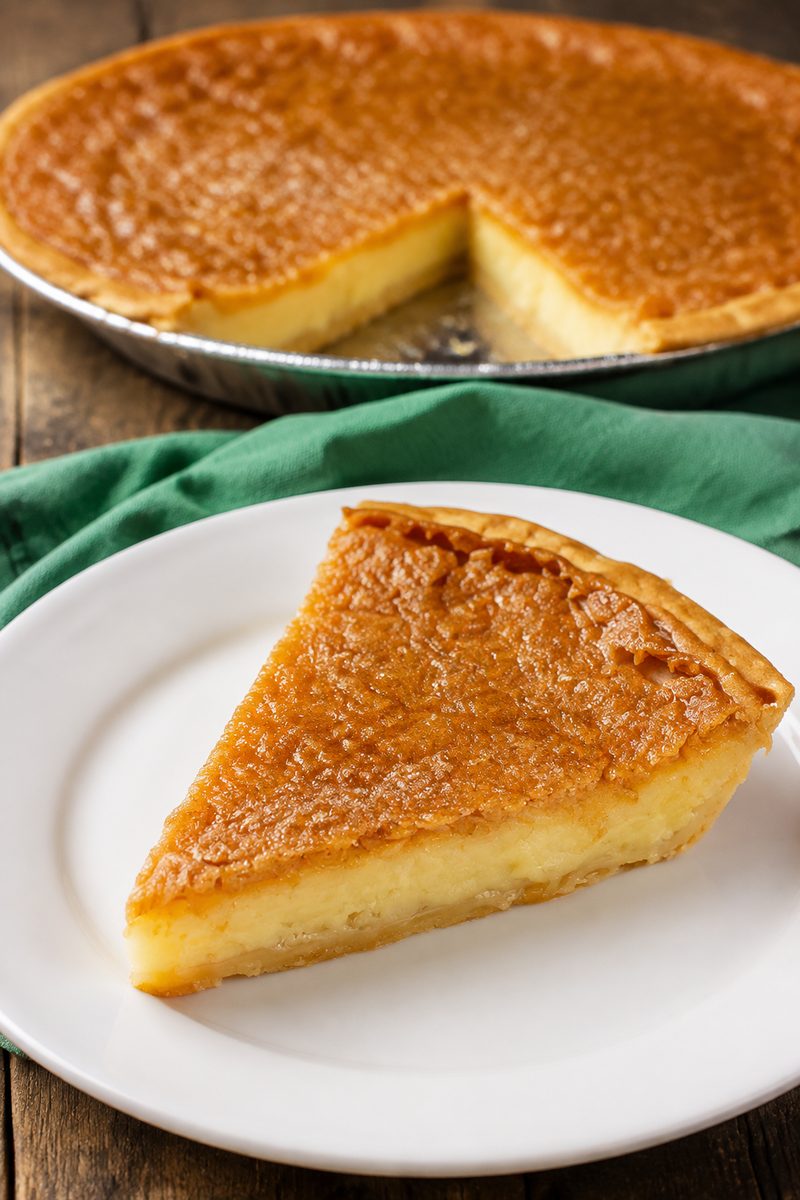
Nobody can tell you for certain how chess pie got its name, and that is half the pleasure of it. Some say it started out as chest pie, because it kept so well in the pie chest without a lick of refrigeration. Others swear it comes from a Southern cook who, asked what she was baking, shrugged and said, jes' pie. A third camp traces it back to the old English lemon cheese pies that crossed the Atlantic and lost their curd along the way. Pick whichever story you like best — the pie doesn't mind.
Whatever you call it, two humble ingredients make it what it is: a spoonful of fine cornmeal and a splash of vinegar. The cornmeal rises as it bakes to form that thin, crackly, sugar-glazed top — the signature of a proper chess pie — while the vinegar quietly cuts the sweetness so a rich pie stays a moreish one. The only other rule worth underlining: take it out while the centre still wobbles. Chess pie finishes setting on the rack, not in the oven; bake it until firm and you trade that fudgy, caramelised custard for a grainy one.
This is pantry baking at its finest — eggs, sugar, butter and a crust, the pie our grannies made when the fruit bowl was empty and company was coming anyway. It keeps for days, travels beautifully, and if anything tastes better the second afternoon, with a pot of strong coffee.
Old-Fashioned Chess Pie
Rich, buttery custard under a crackly sugar top — the Southern classic nobody can quite name.
Ingredients
- 320 g shortcrust pastry (1 ready-rolled sheet), for a deep 23 cm pie tin
- 400 g caster sugar
- 2 tbsp fine cornmeal (polenta), plus 1 tbsp plain flour and ¼ tsp fine salt
- 115 g butter, melted and cooled slightly
- 4 large eggs, at room temperature
- 60 ml whole milk, plus 1 tbsp white vinegar and 1½ tsp vanilla extract
Method
- Line and chill. Line a deep 23 cm pie tin with the pastry, crimp the edge and chill 20 minutes while the oven heats to 200°C (fan 180°C / gas 6).
- Blind bake. Line with baking paper and beans; bake 15 minutes. Lift out paper and beans, bake 5 minutes more until the base looks dry. Turn the oven down to 170°C (fan 150°C / gas 3).
- Mix. Stir the sugar, cornmeal, flour and salt together. Whisk in the melted butter, then the eggs one at a time, then the milk, vinegar and vanilla — gently, until just smooth. No froth.
- Bake. Pour into the warm crust and bake 45–50 minutes, until the top is deep golden and crackly, the edges are set and the centre still has a slight wobble.
- Cool. Cool completely on a rack, 2–3 hours — it sets as it cools. Slice at room temperature, wiping the knife between cuts.
Granny tested hers with a gentle nudge of the tin — the middle should tremble like set jelly, not ripple like water. Chess pie finishes setting on the kitchen windowsill, never in the oven.
Tips for the crackliest top
Gently does it
Whisk until just combined. Beating in air makes a foamy layer that bakes into a pale, spotty crust instead of that glossy, glass-thin crackle.
Wobble, not wave
Pull the pie while the centre still trembles like set jelly — it keeps cooking as it cools. Overbaked chess pie turns grainy and weeps.
Cool it completely
Give it a full 2–3 hours on a rack. Cut warm and it runs; cooled, it slices cleanly into fudgy, caramel-set wedges.
Questions, answered
What makes a chess pie different from buttermilk pie or custard pie?
Two things: a spoonful of fine cornmeal and a splash of vinegar. The cornmeal rises to form the crackly sugar top and the vinegar balances the sweetness. Buttermilk pie is its tangy cousin — soured with buttermilk, softer set and made with no cornmeal at all — while a custard pie is a gentler, milkier egg filling, far less sweet and with no crackle. Chess pie is the densest and richest of the three, almost caramelised, closer to fudge than to custard.
Why is my chess pie runny in the middle?
Either it was underbaked or it was cut too warm. Bake until the edges are fully set and puffed and only the very centre wobbles — 45 to 50 minutes at 170°C (fan 150°C / gas 3) — then cool for a full 2 to 3 hours, because the filling sets as it cools, not in the oven. If a completely cooled pie is still liquid, it needed more oven time; next bake, add 5 to 10 minutes and trust the wobble test.
Can I make lemon or chocolate chess pie with this recipe?
Yes, both are old Southern favourites. For lemon chess pie, replace the milk and vinegar with 60 ml fresh lemon juice, add the finely grated zest of 1 lemon and cut the vanilla to ½ tsp. For chocolate chess pie, whisk 25 g cocoa powder in with the sugar and keep everything else the same. Bake times barely change — go by the set edges and slightly wobbly centre.
How do I store chess pie, and can I freeze it?
Once fully cool, keep it loosely covered at room temperature on baking day, then refrigerate for up to 4 days — bring slices back to room temperature before serving, as the flavour dulls when cold. It freezes well: wrap the cooled pie (whole or in slices) tightly and freeze for up to 2 months, then thaw overnight in the fridge. The crackly top softens a little in storage but the flavour holds beautifully.