Old-Fashioned Cinnamon Rolls
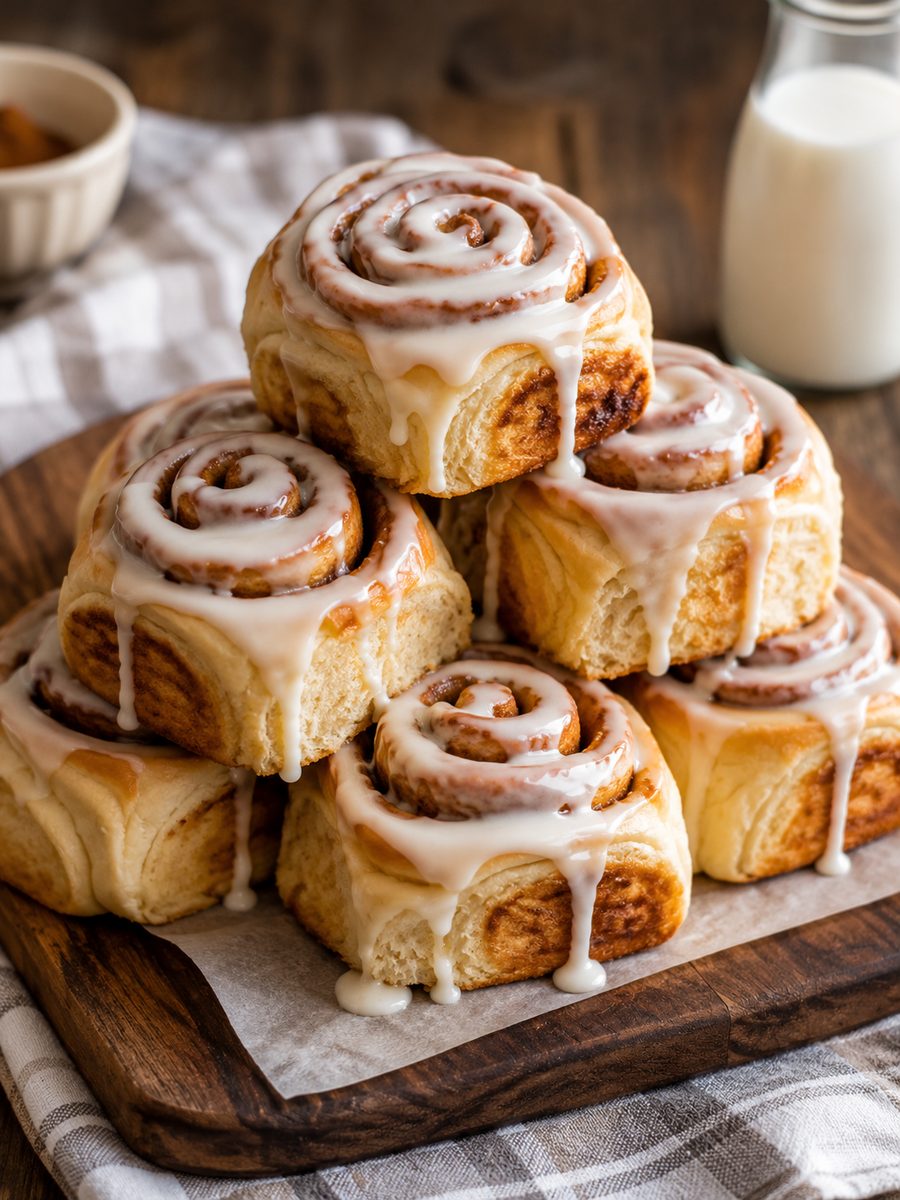

There was always a batch of these on a Sunday, the kitchen windows steamed up and the smell of cinnamon reaching the top of the stairs before anyone was properly awake. Old-fashioned cinnamon rolls are a patient sort of baking — a soft, buttery, egg-enriched dough that likes to take its time — but almost all of that time is the dough quietly rising while you get on with something else.
Two things make or break them. First, the dough must be soft and a little sticky — resist the urge to keep adding flour, because a firm dough bakes into firm rolls. Second, be patient with the rise: let it prove until properly doubled, both before and after shaping, and never start with milk hotter than lukewarm or you will kill the yeast before it has begun.
The last secret is knowing when to stop. Don't overbake them — 20 to 25 minutes at a gentle 350°F (180°C), pulled out while the centers are still soft, keeps them pillowy rather than dry. Ice them while they are still warm so it sinks down into every swirl, and you'll understand why the tin never lasted past breakfast.
Old-Fashioned Cinnamon Rolls
Soft, fluffy and generously spiced — the proper yeasted way, finished with cream-cheese icing.
Tap + or − to scale every ingredient
Ingredients
Tick each one off as you go.
- For the dough
- 4 ⅛ cups (500 g) strong white bread flour, plus extra to dust
- 1 cup (240 ml) whole milk, warmed to lukewarm
- 2 eggs, plus 75 g butter, melted
- 50 g granulated sugar, 7 g fast-action dried yeast and 1 tsp salt
- For the filling
- 1 stick (115 g) butter, softened
- 1 cup packed (200 g) soft light brown sugar
- 2 tbsp ground cinnamon and a pinch of salt
- For the cream-cheese icing
- 100 g full-fat cream cheese
- 50 g butter (softened), 150 g powdered sugar and ½ tsp vanilla
Method
- Warm the milk. Warm the milk until just lukewarm — bath-warm, never hot, or it will kill the yeast. Stir in the melted butter, granulated sugar and yeast, then the beaten eggs.
- Make the dough. Add the flour and salt and mix to a rough dough, then knead 8–10 minutes until smooth, soft and slightly tacky. It should stay a little sticky — resist adding more than a dusting of flour.
- First prove. Cover and leave somewhere warm for 1–1½ hours, until doubled in size. Don't rush this — a full rise is what makes them fluffy.
- Fill and roll. Roll out to a 35 × 45 cm rectangle. Spread with the softened butter, then scatter the brown sugar, cinnamon and salt right to the edges. Roll up tightly from a long side into a log.
- Cut. Cut into 12 with a length of thread or a sharp knife. Sit them cut-side up in a greased 23 × 33 cm tin, spaced a little apart.
- Second prove. Cover and prove again for 30–45 minutes, until puffy and just touching.
- Bake. Bake at 350°F (180°C, fan 160°C) for 20–25 minutes, until golden. Don't overbake — pull them while the centers are still soft.
- Ice. Beat the icing smooth and spread over the rolls while still warm, so it melts down into the swirls.
Make them the night before: shape and cut the rolls into the tin, cover well and keep it in the fridge overnight. In the morning let them come back to room temperature and finish proving while the oven heats — fresh cinnamon rolls, and barely any morning work.
Tips for soft, fluffy rolls
Lukewarm, never hot
Milk that's too hot kills the yeast and the rolls won't rise. It should feel just comfortably warm on your wrist — no more.
Prove until doubled
Rushing the rise gives dense rolls. Give it the full time somewhere warm and draught-free, until the dough has genuinely doubled — a cool kitchen just means it needs a little longer.
Pull them early
Overbaked rolls turn dry. They're done at golden with soft centers — 20–25 minutes is plenty at 350°F (180°C) (fan 325°F (160°C)).
Questions, answered
Why are my cinnamon rolls not fluffy?
Almost always the dough or the prove. Keep the dough soft and slightly sticky — too much flour makes heavy rolls — and let it fully double on both proves. A cool kitchen just means it needs longer, not more yeast, and the milk must be lukewarm, not hot, so the yeast stays alive.
Can I make cinnamon rolls the night before?
Yes. Shape and cut the rolls into the tin, cover well and refrigerate overnight. In the morning bring them to room temperature and let them finish proving until puffy, about 45–60 minutes, then bake as usual.
Can I freeze cinnamon rolls?
Freeze them baked but un-iced: cool completely, wrap well and freeze for up to 3 months, then warm through in a low oven and ice fresh. You can also freeze the shaped, unbaked rolls and prove them from frozen before baking.
Should I use plain or bread flour for cinnamon rolls?
Strong white bread flour gives the best soft, springy, pull-apart texture thanks to its higher gluten. All-purpose flour works too and makes a slightly more tender, cakey roll — either is fine, but bread flour is the old-fashioned bakery choice.
From Granny's Pantry
The know-how behind this recipe: