Old-Fashioned Donuts
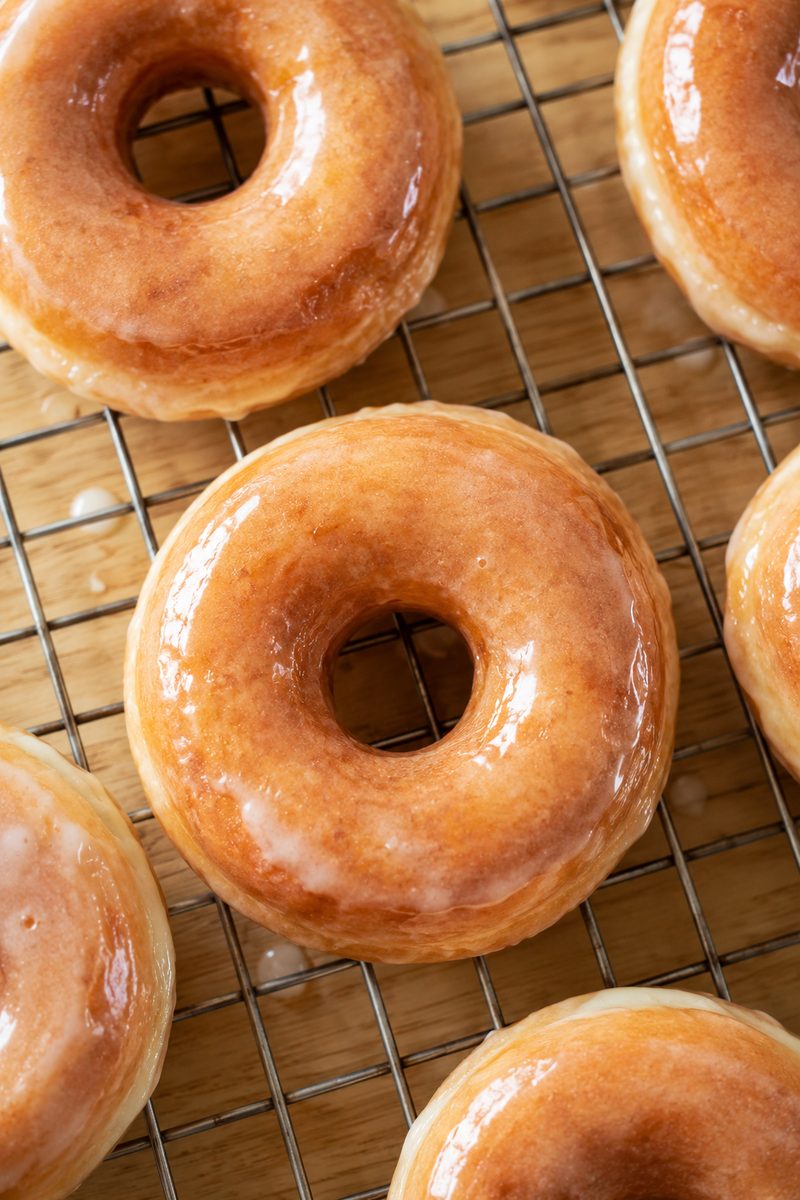

You know an old-fashioned donut on sight: the craggy, cracked crust, the crisp golden edges, the thin glaze soaking down into every split. It's not a fluffy yeasted ring — it's a sour cream cake donut, dense and tender with a gentle tang and a whisper of nutmeg, the kind that came with a mug of coffee at every diner counter in the land.
The magic is all in the temperature. That signature craggy split isn't luck — it happens when cold dough meets hot oil at just the right heat. So the two rules that matter most are: chill the dough properly (keep the cut donuts cold right up until they fry), and hold the oil at 330–340°F (165–170°C). Too warm a dough or too hot an oil and you lose the cracks, the crisp edge, and half the charm.
Glaze them while they're still warm so it seeps into the cracks, and eat them the day they're made — standing over the rack, ideally, before anyone else finds them.
Old-Fashioned Donuts
Sour cream cake donuts — craggy, crisp-edged, and dipped in vanilla glaze.
Tap + or − to scale every ingredient
Ingredients
Tick each one off as you go.
For the donuts
- 2 ⅓ cups (280 g) cake flour (or 250 g plain + 30 g cornstarch)
- 1½ tsp baking powder
- ¾ tsp salt & ¾ tsp nutmeg
- 115 g granulated sugar
- ¼ stick (30 g) butter, softened
- 2 egg yolks
- ⅔ cup (150 g) sour cream
- Neutral oil, for frying
For the glaze
- 2 ⅛ cups (250 g) powdered sugar
- ¼ cup (60 ml) milk & ½ tsp vanilla
Method
- Dough. Whisk the dry ingredients. Beat the sugar and butter until sandy, beat in the yolks, then the sour cream. Fold in the dry just to a soft, sticky dough — don't overmix.
- Chill. Wrap and chill at least 1 hour. Cold dough is what makes the cracks and keeps them from soaking up oil.
- Cut. Roll 1.5 cm thick on a floured surface, cut with a floured cutter, re-roll scraps once. Keep the cut donuts cold.
- Fry at temp. Oil to 330–340°F (165–170°C). Fry 2 at a time, ~2 minutes per side, deep golden and cracked. Let the oil recover between batches.
- Glaze warm. Drain 1 minute, whisk the glaze smooth, dip the warm donuts, drip off the excess. Eat today.
Keep a thermometer clipped to the pot. Frying temperature is the whole game here — guessing gives you greasy or raw, never craggy.
Tips for craggy, crisp donuts
Keep it cold
Chilled dough hitting hot oil is exactly what splits the surface into those craggy cracks.
330–340°F (165–170°C), held
Too hot burns the outside; too cool means greasy. A thermometer isn't optional.
Don't overmix
Fold the flour in just until it comes together — overworked dough turns tough, not tender.
Questions, answered
What makes a donut an 'old-fashioned' donut?
It's a specific style — a sour cream cake donut (baking powder, not yeast) with a craggy cracked surface, crisp edges and a tender, slightly tangy crumb, usually dipped in thin vanilla glaze.
Why don't my old-fashioned donuts crack?
The cracks need cold dough meeting hot oil at the right temperature. Chill well, keep cut donuts cold, and hold the oil at 330–340°F (165–170°C).
Can I bake old-fashioned donuts instead of frying?
You can bake the batter in a donut tin at 350°F (180°C) for ~12 minutes, but you'll miss the craggy crust and crisp edges — those come from frying.
What oil is best for frying donuts?
A neutral, high-smoke-point oil — sunflower, vegetable, canola or peanut. Let it return to temperature between batches so the donuts don't go greasy.
From Granny's Pantry
The know-how behind this recipe: