Old-Fashioned Fudge
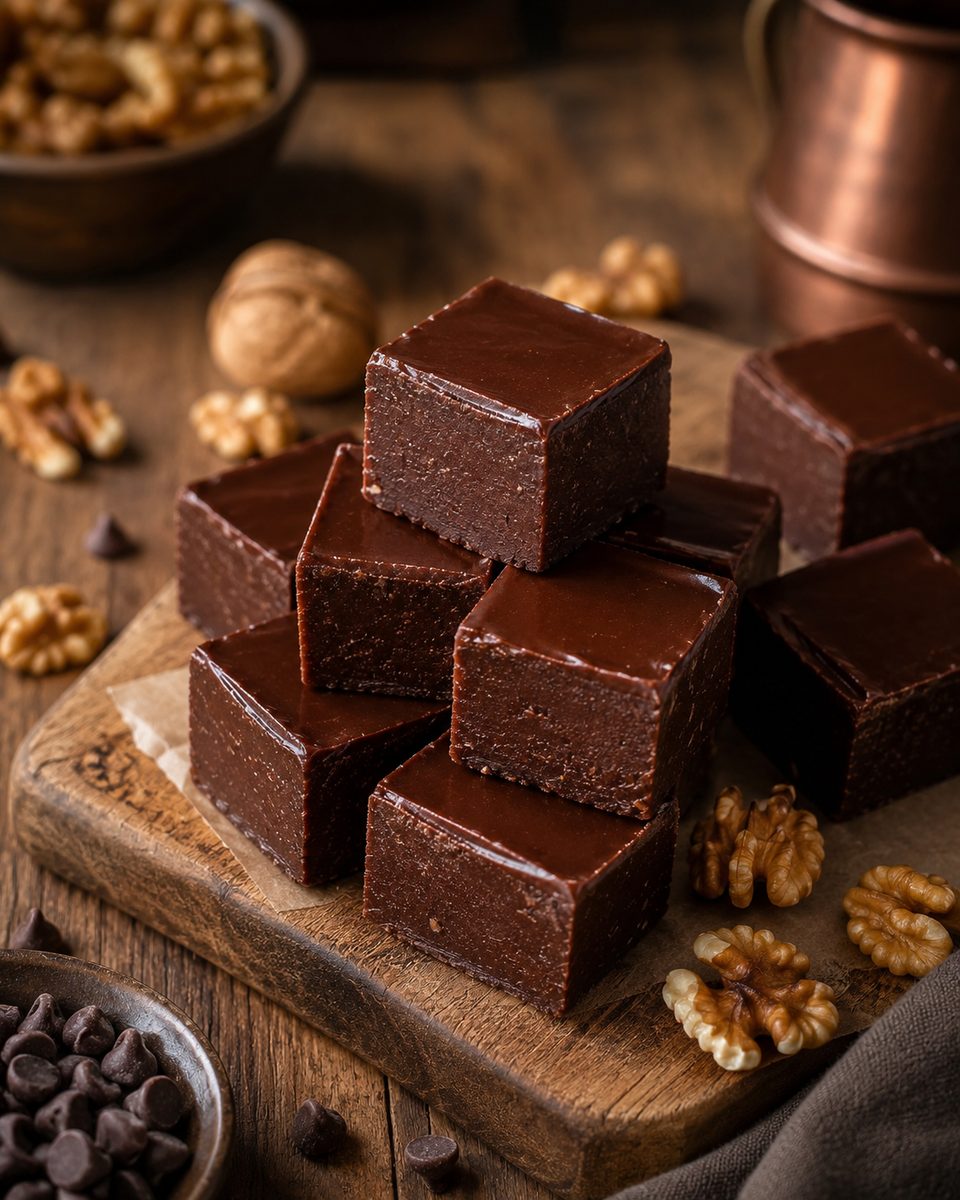

Long before cans of condensed milk turned fudge into a five-minute shortcut, it was made the way our grannies made everything — from what was in the cupboard, with a heavy pan and a bit of nerve. Sugar, cocoa, milk from the doorstep and a pat of butter, boiled and beaten on a Sunday evening while the kitchen windows steamed up. Proper old-fashioned fudge isn't chewy like the shortcut kind: it has a fine, sugary-smooth crumb that gives way and then melts, and no can of anything can imitate it.
Three moments decide everything, and none of them is difficult — they just want your full attention. First, boil the syrup to soft-ball stage, 234–237°F (112–114°C) — and you don't need a thermometer if you know the cold-water test: a drop of syrup in very cold water should roll into a soft, squashable ball. Second, once it comes off the heat, don't stir it — not once — while it cools. Stirring hot syrup seeds coarse crystals, and coarse crystals are exactly what make fudge grainy.
The third moment is the beating. When the pan is barely warm, beat with a wooden spoon until the mixture thickens and suddenly loses its gloss — eight minutes or so, and yes, your arm will know about it. That dull, matt look is your signal: pour it straight into the pan, scrape the spoon (cook's perk), and let it set into the fudge you remember.
Old-Fashioned Fudge
Proper boiled chocolate fudge, beaten by hand to a fine melt-away crumb — no condensed milk in sight.
Tap + or − to scale every ingredient
Ingredients
Tick each one off as you go.
- 3 cups (600 g) granulated sugar
- 50 g cocoa powder, sifted
- 1 ½ cups (350 ml) whole milk
- ½ stick (60 g) unsalted butter, cubed
- 1 tsp vanilla extract and ¼ tsp fine salt
Method
- Prepare. Butter a 20 cm square pan and line with baking paper. Pick a large, heavy-based saucepan (3 liters at least) — the syrup climbs surprisingly high as it boils.
- Dissolve. Stir the sugar, cocoa and salt into the milk over low heat until completely dissolved — no grittiness against the back of the spoon. About 10 minutes; do it properly.
- Boil. Bring to a steady boil and stop stirring. Wash any crystals off the pan sides with a wet pastry brush. Boil to 234–237°F (112–114°C) — soft-ball stage — 10–15 minutes. No thermometer? A drop in cold water should roll into a soft, squashable ball.
- Rest. Off the heat, drop in the butter and vanilla — do not stir. Leave completely undisturbed until barely warm (about 113°F (45°C)), 40 minutes to 1 hour.
- Beat. Beat steadily with a wooden spoon, 8–10 minutes, until it thickens, lightens a shade and abruptly loses its gloss. The moment it turns matt, stop.
- Set. Scrape quickly into the pan — don't scrape the very sides of the pan — and smooth the top. Set at room temperature, 1–2 hours, then cut into 36 squares.
The window between glossy and set is a matter of seconds — Granny always had the pan lined and sitting at her elbow before she picked up the spoon, so the fudge went in the moment it turned matt, not thirty seconds after.
Tips for smooth, never-grainy fudge
Big pan, heavy base
A heavy base stops the cocoa catching, and a 3-liter pan gives the boiling syrup room — it climbs alarmingly high at a full boil.
Trust the cold-water test
No thermometer needed: a drop of syrup in very cold water that rolls into a soft, squashable ball means soft-ball stage. Threads mean keep boiling; a firm ball means pour now.
Patience pays twice
Cooling undisturbed and beating fully both build the fine crystals that make fudge smooth instead of gritty. Rush either one and you'll taste it.
Questions, answered
Why is my old-fashioned fudge grainy?
Almost always one of two things: it was stirred while it cooled, or sugar crystals from the side of the pan got scraped in. Once the syrup has boiled, any stirring before it cools to about 113°F (45°C) seeds large crystals, and every one of them grows — that is the grit. Wash crystals off the pan sides with a wet pastry brush during boiling, and never scrape the pan when you pour. Grainy fudge can be rescued: return it to the pan with 60 ml milk, dissolve over low heat and cook to soft-ball stage again.
How do I test for soft-ball stage without a sugar thermometer?
Drop half a teaspoon of the boiling syrup into a glass of very cold water, leave it a few seconds, then gather it with your fingertips. At soft-ball stage (234–237°F (112–114°C)) it rolls into a soft, pliable ball that flattens when you lift it out of the water. If it just dissolves into threads, boil on and test again in 2–3 minutes; if it forms a firm ball, you are slightly past — take it off the heat at once.
Why didn't my fudge set?
Either the syrup never quite reached soft-ball stage — a degree or two genuinely matters — or it was not beaten long enough, because beating is what triggers the fine crystallization that firms it. Soft fudge can be recooked: melt it back down with a splash of milk, boil to 234–237°F (112–114°C) and start again. On very humid days, cook to the top of the range, 235°F (114°C).
Can I make fudge ahead, and how long does it keep?
Yes — if anything it is better on day two, once the texture settles. Keep it 2 weeks in an airtight Tin at cool room temperature, layers separated with baking paper; the fridge can turn it sticky. It freezes well for 3 months, wrapped tightly. Thaw overnight still wrapped, so condensation forms on the wrapper rather than the fudge.