Old-Fashioned Snickerdoodles
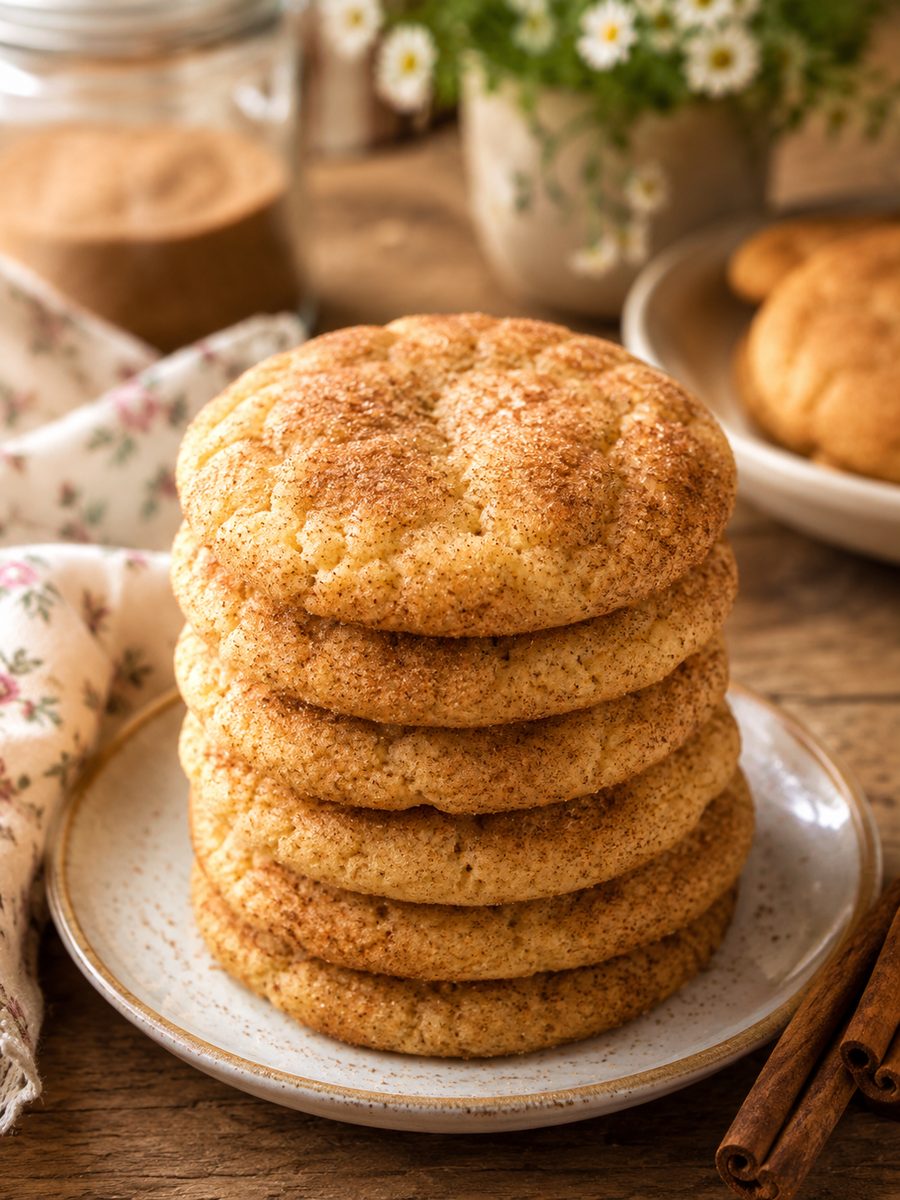

Nobody quite agrees where the name came from — an old Dutch word, a bit of nonsense, a character in a children's tale — but everyone with a battered biscuit tin knows the smell: warm cinnamon with a faint, almost lemony tang. Grannies baked a batch on a Sunday afternoon, and they were gone by teatime, still soft in the middle and cracked across the top like dried earth.
The one thing that turns an ordinary sugar cookie into a proper snickerdoodle is cream of tartar. It gives that gentle tang and, working alongside the baking soda, the crackled surface and chewy bite. Leave it out and you've simply made a cinnamon cookie; put it in and it's the real, old-fashioned thing.
The other rule is all about timing. Pull them out while the centers still look soft and underdone — puffed, pale and barely set. They keep cooking on the hot tray and settle into that bendy, chewy middle. Wait until they're golden all over and you'll have crisp biscuits instead of soft snickerdoodles.
Old-Fashioned Snickerdoodles
Soft, chewy cinnamon-sugar cookies with the classic tang & crackly top.
Tap + or − to scale every ingredient
Ingredients
Tick each one off as you go.
- 3 cups (350 g) all-purpose flour
- 2 tsp cream of tartar (the snickerdoodle secret)
- 1 tsp baking soda and ½ tsp fine salt
- 2 sticks (225 g) butter, softened
- 1 ½ cups (300 g) granulated sugar
- 2 eggs, plus 1 tsp vanilla
- For rolling: 3 tbsp granulated sugar and 1 tbsp ground cinnamon
Method
- Mix the dry. Whisk the flour, cream of tartar, baking soda and salt together and set aside.
- Cream. Beat the softened butter and granulated sugar until pale and fluffy, then beat in the eggs and vanilla.
- Make the dough. Mix in the dry ingredients just until a soft dough forms — don't overwork it.
- Roll. Oven to 375°F (190°C, fan 170°C). Roll walnut-sized balls and turn them generously in the cinnamon sugar.
- Bake. 9–11 minutes, until the edges are set but the centers still look soft, puffed and crackled — pull them while underdone.
- Cool. 5 minutes on the tray to finish setting, then lift onto a wire rack.
Cream of tartar loses its power sitting at the back of the cupboard for years — if yours is older than you can remember, treat yourself to a fresh tin. It's the whole soul of a snickerdoodle, the tang and the crackle.
Tips for soft, chewy snickerdoodles
Don't skip the cream of tartar
It's what makes a snickerdoodle a snickerdoodle — the gentle tang and the crackly top. A plain sugar cookie it is not.
Underbake, every time
Take them out when the centers still look soft and puffy. They firm up as they cool and stay chewy for days.
Roll them generously
Coat each ball heavily in cinnamon sugar — a thin dusting just disappears into the bake. For taller cookies, chill the dough for 15 minutes first.
Questions, answered
What does cream of tartar do in snickerdoodles?
It gives snickerdoodles their signature slight tang and, reacting with the baking soda, their crackly, chewy top. Without it you simply have a plain cinnamon sugar cookie, not a true snickerdoodle.
Why did my snickerdoodles turn out flat and crisp instead of soft?
Usually the butter was too warm, the dough too soft, or they baked a minute or two too long. Chill the dough for 15 minutes and pull the cookies while the centers still look underdone — they carry on setting as they cool.
Can I make snickerdoodles without cream of tartar?
You can, but they won't taste quite the same. Replace the 2 tsp cream of tartar and 1 tsp baking soda with 2 tsp baking powder. You lose a little of the tang, but they will still be soft cinnamon cookies.
Can I freeze snickerdoodle dough?
Yes. Roll the dough into balls, coat them in the cinnamon sugar, and freeze on a tray before bagging them up. Bake straight from frozen, adding 1 to 2 minutes. Baked cookies also freeze well for up to 3 months.
From Granny's Pantry
The know-how behind this recipe: