Old-Fashioned Tapioca Pudding
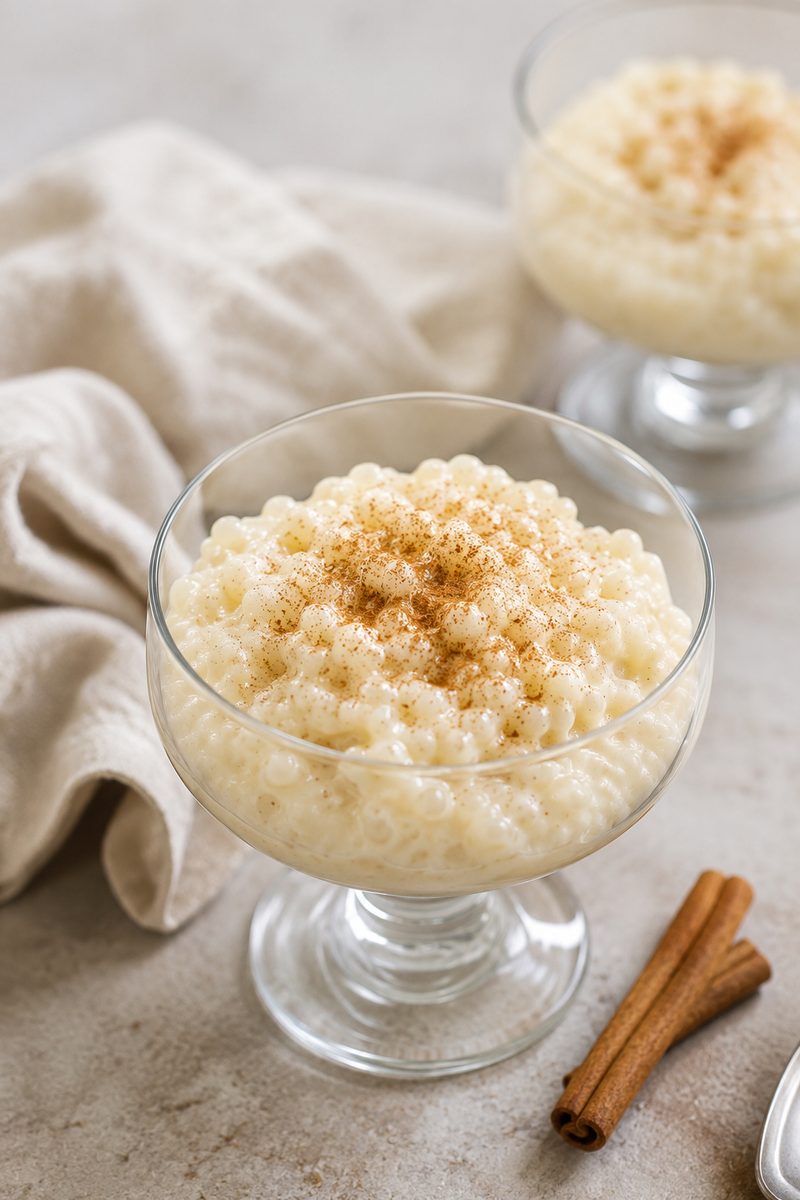
Tapioca pudding is one of those puddings that skipped a generation — beloved by our grandmothers, teased mercilessly at school dinners, and now quietly craved by everyone who remembers a bowl of it warm from the stove. Granny made hers with proper small pearl tapioca on the back burner while she got on with other jobs, and the whole kitchen smelled of warm milk and vanilla by teatime.
Two things separate silky from sad, and neither is difficult. First, soak the pearls before you cook them — half an hour at the very least — or the centres stay chalky no matter how long they simmer. Second, keep the heat low and temper the yolks: milk scorches and eggs scramble the moment you rush them, so a ladleful of the hot milk goes into the yolks before the yolks go anywhere near the pan.
Take it off the heat while it still looks a little loose — it thickens considerably as it cools — and if you want it exactly as granny served it, fold softly whipped egg whites through while the pudding is still warm. That old-fashioned trick gives it a light, almost cloud-like texture, and costs you nothing but two minutes with a whisk.
Old-Fashioned Tapioca Pudding
Creamy, gently set and full of tender pearls — the classic stovetop pudding, made properly with real pearl tapioca.
Ingredients
- 90 g small pearl tapioca (not instant)
- 250 ml cold water, for soaking
- 900 ml whole milk
- 100 g caster sugar, divided
- 2 eggs, separated
- ¼ tsp fine salt and 1 tsp vanilla extract
Method
- Soak. Put the pearls in a heavy-based saucepan with 250 ml cold water and leave for 30 minutes (or overnight in the fridge). Don't drain — most of the water soaks in.
- Simmer. Add the milk and salt. Bring just to a bare simmer over low heat, then cook gently, uncovered, 15–20 minutes, stirring often, until every pearl is translucent right through.
- Temper. Whisk the yolks with 75 g of the sugar until pale. Whisk in a ladleful of the hot milk, then a second, then pour it all back into the pan, whisking.
- Thicken. Cook 3–4 minutes more over the lowest heat, stirring constantly, until it just coats the back of the spoon — never let it boil. Off the heat, stir in the vanilla.
- Lighten (optional). Whisk the whites with the remaining 25 g sugar to soft peaks and fold through the hot pudding in two goes — the traditional light, fluffy finish.
- Serve. Warm, or chilled with cling film pressed onto the surface. It thickens noticeably as it cools, so don't judge it straight off the stove.
Granny never trusted the clock — she trusted the pearls. Lift one out on a spoon: it should be glass-clear right through, with no white pinprick at the centre. One cloudy pearl means the whole pot wants another five minutes.
Tips for the creamiest pudding
Don't skip the soak
Unsoaked pearls stay stubbornly chalky in the middle no matter how long you simmer. Thirty minutes is the minimum; overnight in the fridge is even better.
Low heat, always
Milk scorches and eggs scramble over anything more than gentle heat. A bare simmer with frequent stirring is as hot as this pudding ever wants to be.
It sets as it cools
Take it off while it still looks like thin custard — it firms dramatically in the bowl. Cook it thick in the pan and it sets like wallpaper paste.
Questions, answered
Can I use instant tapioca instead of small pearl tapioca?
Yes, with adjustments: use 45 g of instant or quick-cook tapioca (half the weight of the pearls), skip the long soak, and simply let it stand in the milk for 5 minutes before cooking. It thickens in about 10 minutes but gives a finer, more uniform texture — you lose the distinct tender pearls that make the old-fashioned version special. Going the other way, never substitute pearl tapioca into an instant recipe without soaking it first.
Why is my tapioca pudding thin and runny?
Two usual culprits. First, the pearls were undercooked — every pearl must be fully translucent with no white centre, or the starch that thickens the pudding is never released. Second, you may simply be judging it too soon: tapioca pudding thickens dramatically as it cools, so a pudding that looks loose off the stove is usually perfect after 2 hours in the fridge.
Can I make tapioca pudding ahead, and does it freeze?
It keeps beautifully for 3 days in the fridge, covered with cling film pressed directly onto the surface to stop a skin forming. It sets firmer when cold, so loosen it with a splash of milk before serving. Do not freeze it — the pearls turn rubbery and the custard weeps as it thaws.
Why did my pudding curdle or turn grainy?
The eggs got too hot. Always temper the yolks by whisking a ladleful of the hot milk into them before they go into the pan, then keep the heat at its lowest and never let the pudding boil once the yolks are in. If it just starts to catch, pull the pan off the heat and whisk hard — caught early, it will smooth out again.