Old-Fashioned Chicken Francese
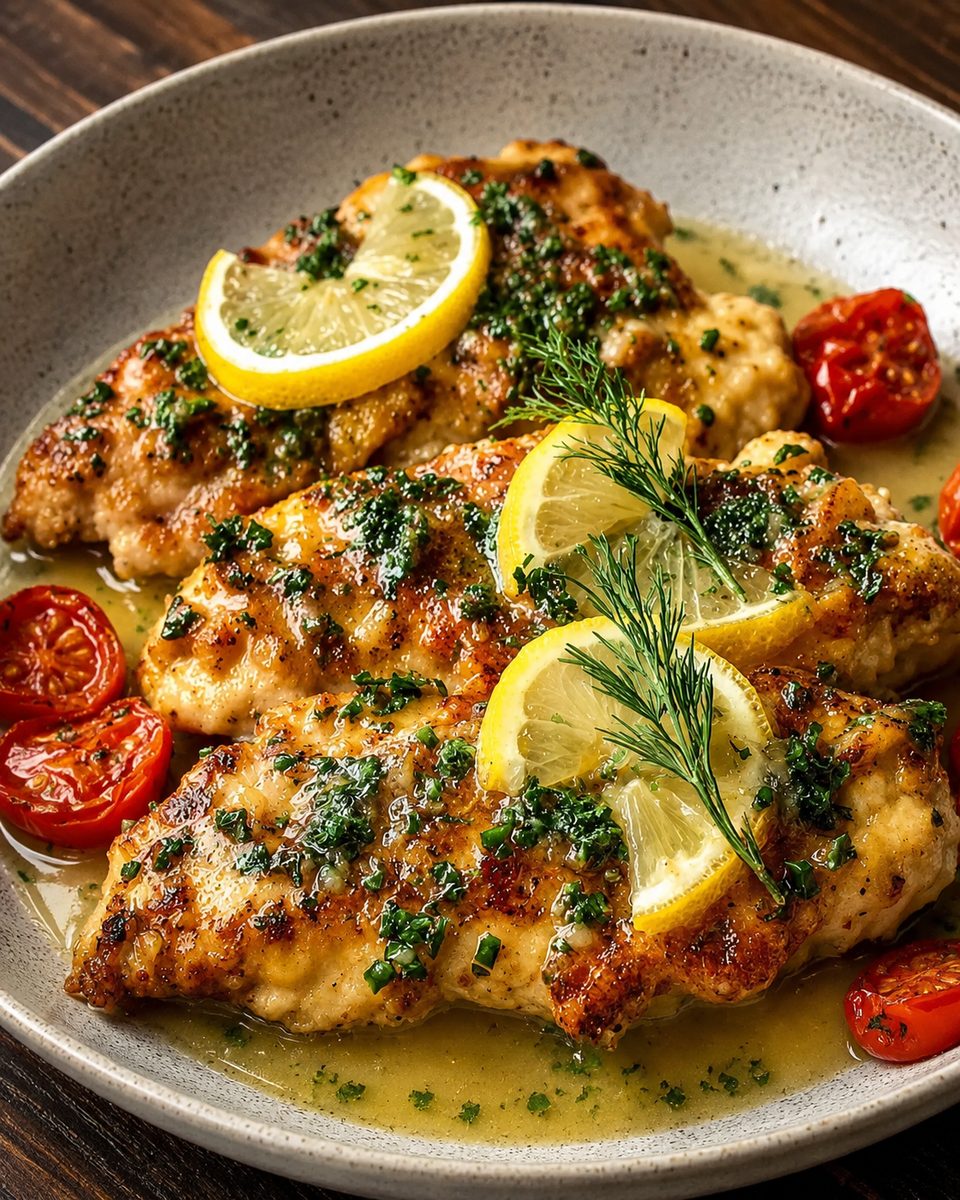

Chicken francese is the dish Italian-American restaurants built their weeknight reputation on, and it is genuinely simple once you understand what makes it different. Nearly every other breaded cutlet goes flour, egg, breadcrumb. This one goes flour, egg, and straight into the pan. There is no breadcrumb at all, and that is the whole point: the egg sets into a soft golden jacket rather than a crust, and it drinks up the lemon sauce instead of repelling it.
The name causes arguments. Francese means French in Italian, though the dish is American, and you will see it written francaise on half the menus in New York. Whatever it is called, the method came over with cooks who were used to finishing things in a pan sauce, and it rewards the same patience: brown the cutlets, get them out, build the sauce in what they left behind.
The two failures are both easy to avoid. Cutlets thicker than about half an inch will not cook through before the egg jacket burns, so pound them thin. And the butter must go into the sauce off the heat, swirled in cold, or it splits into oil and the whole thing looks broken.
Old-Fashioned Chicken Francese
Thin chicken cutlets in an egg batter, browned in butter and simmered in a bright lemon pan sauce — the Italian-American supper that tastes like far more work than it is.
Tap + or − to scale every ingredient
Ingredients
Tick each one off as you go.
- FOR THE CHICKEN
- 1 ½ lb (700 g) boneless skinless chicken breasts, halved and pounded thin
- ½ cup (60 g) all-purpose flour
- 3 large eggs
- ⅓ cup (30 g) Parmesan, finely grated
- 45 ml olive oil
- Salt and black pepper, to taste
- FOR THE LEMON SAUCE
- ½ cup (120 ml) dry white wine
- 1 ¼ cups (300 ml) chicken broth
- ⅓ cup (80 ml) lemon juice, from about 2 lemons
- ¾ stick (85 g) cold butter, cut into cubes
- ¼ cup (15 g) flat-leaf parsley, chopped
- 1 lemon, sliced into thin rounds
Method
- Pound them thin. Halve each breast horizontally, lay the pieces between two sheets of plastic and beat them out to about 1 cm with a rolling pin or the flat of a pan. Even thickness matters more than thinness — a cutlet with a thick end will still be raw there when the thin end has gone leathery. Season both sides well.
- Set up two plates. Flour with a pinch of salt and pepper on one. On the other, the eggs beaten with the Parmesan until completely uniform. The cheese in the egg is what makes this taste like a restaurant version rather than a plain one, and it browns beautifully.
- Flour, then egg, then pan. Dredge a cutlet in flour and shake off every loose speck, then turn it through the egg and let the excess run off for a second before it goes into the skillet. No breadcrumbs — this is the step people add out of habit and it makes a different dish entirely.
- Brown in batches. Heat the olive oil with a knob of the butter over medium heat and cook the cutlets 3 to 4 minutes a side, until the egg jacket is set and deeply golden. Do not crowd the pan or they steam and go pale. Move them to a plate as they finish; they will get another minute in the sauce later.
- Deglaze with the wine. Pour off any burnt oil but keep the browned bits, then add the wine and scrape the bottom of the pan as it bubbles. Let it reduce by about half, roughly 2 minutes. That fond is the backbone of the sauce and it will lift off easily once the wine hits it.
- Build the sauce. Add the broth and lemon juice and simmer for 4 to 5 minutes until it has reduced by about a third and tastes bright rather than thin. Slide in the lemon rounds. Taste it now, before the butter, and correct the salt — butter mutes seasoning and you will misjudge it afterward.
- Butter off the heat. Take the pan off the burner entirely and swirl in the cold butter a few cubes at a time, keeping the pan moving until each addition disappears. Cold butter and no direct heat is what holds the emulsion together. Boil it now and it separates into a greasy slick you cannot bring back.
- Return and serve. Slip the cutlets back in with any juices from the plate and turn them once in the sauce over the lowest heat, just long enough to warm through. Scatter over the parsley and serve straight away, with the sauce spooned over and bread or buttered noodles to catch the rest.
Save the second lemon's zest and scatter it over at the very end, off the heat. Cooked lemon juice goes round and mellow, which is what you want in the sauce; raw zest puts the sharp top note back on the plate.
Tips for a sauce that stays glossy
Even thickness beats thin
A cutlet pounded to a consistent 1 cm cooks through evenly in the time it takes the egg to brown. One that tapers will always give you a dry end and a raw end no matter how carefully you watch the pan.
Shake the flour off properly
Loose flour falls into the pan, burns in the butter, and turns the sauce gritty and bitter when you deglaze. A firm shake over the plate before the egg dip takes two seconds and saves the pan sauce.
Cold butter, off the heat
This is the step that separates a glossy sauce from a broken one. The pan must be off the burner and the butter must come straight from the refrigerator, added a few cubes at a time and swirled rather than stirred.
Questions, answered
What is the difference between chicken francese and chicken piccata?
Francese dips the cutlet in flour and then egg, so it cooks in a soft golden jacket, and the sauce is lemon, wine and butter. Piccata skips the egg, uses flour alone, and adds capers to the sauce. Francese is richer and milder; piccata is sharper and briny.
Why is it called chicken francese if it is Italian?
Francese means French in Italian, and the dish is neither — it was created by Italian-American cooks in the United States, most likely in New York, borrowing a French-style pan sauce. You will also see it spelled francaise on menus.
Can you make chicken francese without wine?
Yes. Replace the wine with the same amount of chicken broth plus an extra tablespoon of lemon juice to get back the acidity the wine was providing. The sauce will be slightly less complex but still very good.
Why did my lemon sauce break or turn greasy?
The butter went in over heat, or the sauce boiled after it was added. Take the pan off the burner completely, then swirl in cold butter a few cubes at a time. If it does split, whisk in a tablespoon of cold broth off the heat and it will often come back together.
Can you make chicken francese ahead of time?
It is best straight from the pan, since the egg jacket softens as it sits. If you must get ahead, brown the cutlets and make the sauce separately, then reheat the sauce gently and warm the cutlets through in it at the last minute rather than reheating the finished dish.