Old-Fashioned Peanut Brittle
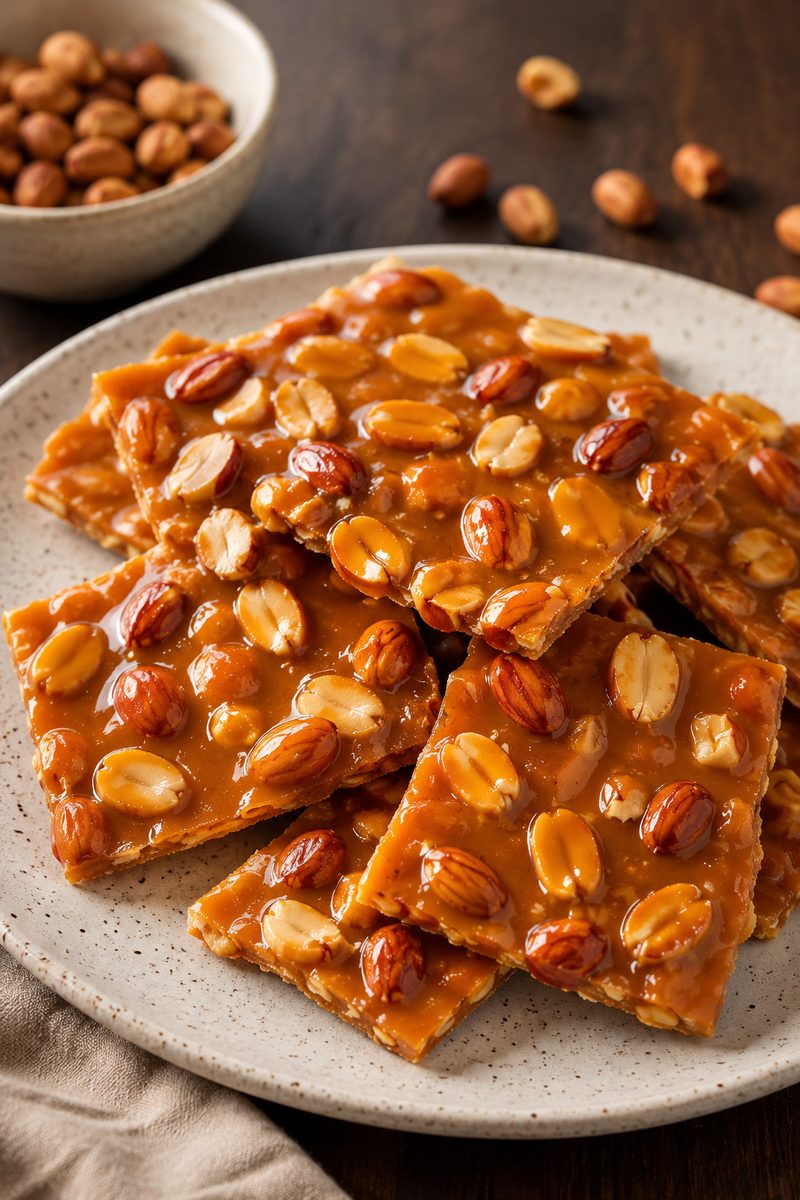
Peanut brittle was a December recipe in our house — the one that turned the kitchen into a sweet factory for an afternoon. Granny made hers in a battered old saucepan with a wooden spoon gone amber at the edges, and the finished slabs were snapped up and layered into tins between sheets of greaseproof paper: one tin for home, one for whoever called in over Christmas. The smell of caramel and roasting peanuts together met you at the front door.
Two things stand between you and brittle that snaps like glass. First, the syrup must truly reach hard-crack stage — 149–154°C. A few degrees short leaves water trapped in the sugar and you get chew, not crack. No thermometer? Do it granny's way: drip a little syrup into ice-cold water — it is ready when it sets instantly into brittle threads that snap clean. Second, the real family secret: the bicarbonate of soda stirred in at the very end. It foams the hot toffee full of thousands of tiny bubbles, and those bubbles are what make brittle light and shatteringly crisp instead of tooth-breaking.
One warning and one promise. The warning: sugar at hard-crack is over 150°C and it sticks, so measure everything before you start — the last minute moves fast — keep small children out of the kitchen, and never taste it hot. The promise: it is genuinely a 40-minute job, it costs pennies, and a cellophane bag of home-made brittle is still the best sweet-shop present there is.
Old-Fashioned Peanut Brittle
Deep golden, buttery and thin enough to shatter — with the bicarb trick that puts the snap in brittle.
Ingredients
- 400 g granulated or caster sugar
- 200 g golden syrup (or light corn syrup)
- 120 ml water
- 300 g unsalted roasted peanuts
- 30 g butter, cubed, plus extra for the trays
- 1½ tsp bicarbonate of soda, sifted
- 1 tsp vanilla extract and ½ tsp fine sea salt
Method
- Get everything ready. Grease two large baking trays well with butter (or line with parchment and grease that) and warm them in a low oven. Cube the butter; measure the vanilla, salt and sifted bicarbonate of soda into little bowls by the hob. The end moves fast — and hot sugar is over 150°C, so no children underfoot and never taste it.
- Dissolve. Sugar, golden syrup and water into a deep, heavy pan of at least 3 litres (it foams later). Medium heat, stirring gently until every grain has dissolved, then clip on a sugar thermometer and stop stirring.
- Boil. Boil steadily, without stirring, to 140°C — about 10–12 minutes. Wash any crystals off the pan sides with a pastry brush dipped in hot water.
- Add the peanuts. Stir in the peanuts and salt and keep cooking, now stirring constantly, until deep amber and 149–154°C — hard-crack stage. No thermometer? A drip in ice-cold water should set into threads that snap clean; if they bend, keep boiling.
- Bicarb. Off the heat, working fast: stir in the butter and vanilla, then the sifted bicarbonate of soda. It foams up pale gold — that foam is the snap. Stir just until evenly blended, no more.
- Pour and stretch. Pour at once onto the warm trays and spread with a spatula. After a minute, when the edges will take a fork, use two forks to stretch the sheet as thin as you can — thin brittle snaps, thick brittle pulls fillings.
- Snap. Cool completely, about 30 minutes, then snap into rough shards. Into an airtight tin the moment it is cold — brittle hates damp air.
Granny always warmed her trays in the oven before she poured — hot toffee spreads twice as thin on a warm tray, and thin is what makes brittle brittle.
Tips for a glassy snap
Hard-crack or nothing
The whole recipe lives at 149–154°C. A drip of syrup in ice-cold water should set into threads that snap clean — if they bend, keep boiling.
Measure everything first
Butter, vanilla and sifted bicarb standing ready by the hob before the sugar goes on. The final minute moves far too fast for rummaging in cupboards.
Sift the bicarb, stir briskly
Lumps leave bitter pockets, and the foam is the snap — stir just until it is evenly pale gold, then pour at once before the bubbles settle.
Questions, answered
Why is my peanut brittle chewy instead of crisp?
Nine times out of ten the syrup never truly reached hard-crack stage, 149–154°C, so water was left in the sugar and it set soft. Trust the cold-water test: a drip in ice-cold water should snap, not bend. The other culprit is humidity — brittle drinks moisture from damp air and softens, so make it on a dry day and seal it in an airtight tin the moment it is cold. Chewy brittle can be rescued: melt it gently back down with a splash of water, stirring constantly, and re-boil it to 150°C.
How should I store peanut brittle and how long does it keep?
In an airtight tin or jar at cool room temperature, with greaseproof paper between the layers, it keeps 6 to 8 weeks. Never store it in the fridge — condensation forms on the sugar and turns it sticky and grainy. Freezing carries the same risk when it thaws; a well-sealed tin in a dry cupboard is genuinely better.
Can I use raw peanuts instead of roasted?
Yes — that is the truly old-fashioned way. Stir raw shelled peanuts in much earlier, at about 115°C, and they roast in the boiling syrup as it climbs to hard-crack; it takes a few minutes longer and needs near-constant stirring so they do not scorch. Ready-roasted nuts go in at 140°C as written, since they only need warming through. If your peanuts are salted, simply leave out the added salt.
Why do you put bicarbonate of soda in peanut brittle?
It is the secret of the snap. Bicarbonate of soda reacts with the hot syrup and releases thousands of tiny carbon-dioxide bubbles, which aerate the toffee so it sets light, porous and shatteringly crisp rather than dense and tooth-breaking. It also lightens the colour to that classic honeycomb gold. Sift it first — lumps leave bitter pockets.