Dinners · Instant Pot

Instant Pot Beef Stew
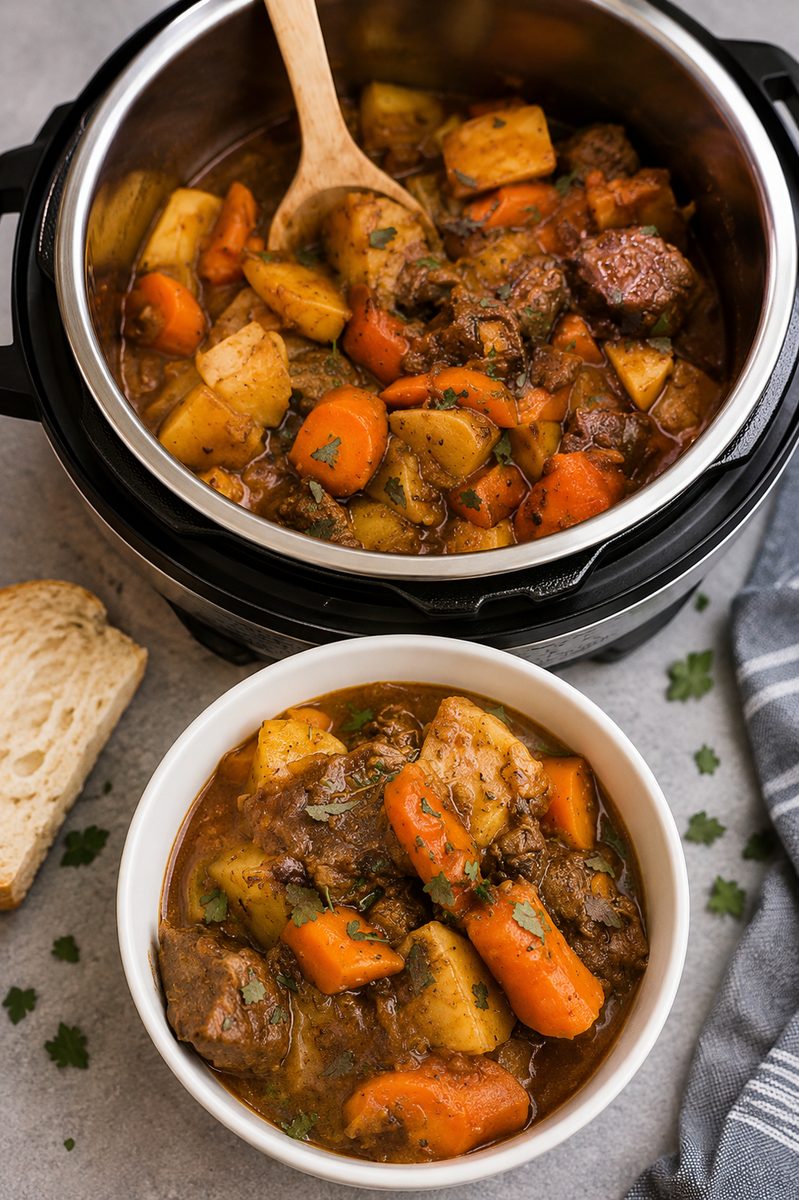
Beef Stew

Granny's beef stew asked for a whole afternoon and a heavy pot she guarded like a dragon. The Instant Pot gets you the same deep, gravy-rich stew with 35 minutes at pressure — about an hour and a half door to bowl. She would have eyed this machine with suspicion, then claimed it as her own.

Two things earn you the old flavour. First, brown the beef properly, in batches, on the Sauté setting — crowded meat steams grey, and grey meat makes grey stew. Second, deglaze like you mean it. Every scrap of browned goodness must come off the base before the lid goes on, because stuck-on bits are exactly what triggers the dreaded burn error. That crust is flavour anyway. Scrape it into the gravy where it belongs.

One more rule, and it is not negotiable: the cornflour goes in after the pressure cooking, never before. Thickeners under pressure catch on the base and burn. Let the pot do its work with thin stock, give the beef its 10 minutes of natural release so it stays tender, then thicken at the end with the lid off. Patience at that last step is the whole trick.

Ad · in-content (Raptive / Mediavine)

Instant Pot Beef Stew

Old-fashioned beef stew flavour from the electric pressure cooker, on the table in about an hour and a half.

Prep20 min
Cook1 hr 15
Total1 hr 35
Serves6
4.8 / 5
6 servings

Tap + or − to scale every ingredient

Ingredients

Tick each one off as you go.

  • 1.2 kg beef chuck (stewing beef), cut into 4 cm chunks (about 2.5 lb)
  • 2 tbsp beef dripping or vegetable oil
  • 1 large onion, roughly chopped
  • 3 garlic cloves, minced
  • 2 tbsp tomato puree (tomato paste)
  • 500 ml beef stock (about 2 cups)
  • 1 tbsp Worcestershire sauce
  • 1 tsp dried thyme
  • 2 bay leaves
  • 700 g potatoes, peeled and cut into large chunks
  • 350 g carrots, peeled and cut into thick coins
  • 3 tbsp cornflour (cornstarch) mixed with 3 tablespoons cold water
  • 150 g frozen peas (optional)
  • Salt and pepper, to taste

Method

  1. Brown. Pat the beef dry and season it well with salt and pepper. Set the Instant Pot to Saute and heat 1 tablespoon of the dripping until shimmering. Brown the beef in three batches, 3 to 4 minutes a batch, turning once for a proper dark crust. Do not crowd the pot. Set the browned beef aside on a plate with its juices.
  2. Deglaze. Add the last tablespoon of dripping and soften the onion for 3 minutes. Stir in the garlic and tomato puree for 1 minute. Pour in the 500 ml beef stock and scrape the base hard with a wooden spoon until not one browned bit remains stuck. This is not optional — stuck-on bits are what trigger the burn error, and they are flavour besides.
  3. Load. Return the beef and every drop of its juices to the pot. Add the Worcestershire sauce, thyme and bay leaves and give it one stir. Sit the potatoes and carrots on top of the meat and leave them there — do not stir them in. Keeping them off the base keeps them in proper pieces.
  4. Pressure cook. Lock the lid and set the valve to Sealing. Pressure Cook on High for 35 minutes; the pot takes about 10 minutes to come up to pressure first. When it beeps, leave it alone for a 10 minute natural release — rushing the valve now seizes the beef — then release the remaining steam.
  5. Thicken. Fish out the bay leaves and set the pot back to Saute. Give the cornflour slurry a fresh stir and pour it into the bubbling stew, stirring for 2 to 3 minutes until the gravy turns glossy and coats a spoon. Stir in the peas, if using, for a final 2 minutes.
  6. Serve. Press Cancel, taste, and season with salt and pepper. The beef should fall apart at the nudge of a fork — if a piece resists, it wanted its full time, not less. Let the stew sit 5 minutes so the gravy settles, then ladle into deep bowls with bread for mopping.
Granny's tip

Brown the beef in three batches even when you are tempted to tip it all in at once. Crowded meat steams instead of browning, and that crust is where the whole stew's flavour lives.

Tips for a proper pressure-cooker stew

Deglaze like you mean it

The Instant Pot will not forgive a lazy scrape. Any browned bits left stuck to the base after you pour in the stock will scorch and set off the burn warning. Work the wooden spoon over every inch before the lid goes on.

Thicken after, never before

Cornflour or flour added before pressure cooking settles, catches and burns. Cook the stew with thin stock, then stir the slurry in on Saute at the end. Three minutes of bubbling gives you a gravy that would pass granny's spoon test.

Respect the natural release

Those 10 quiet minutes after the beep are part of the cooking. Yank the valve straight away and the beef tightens up tough. Let the pressure fall on its own, then vent what is left.

Questions, answered

Why did my Instant Pot show the burn error?

Almost always one of two sins: browned bits left stuck to the base after deglazing, or a thickener added before pressure cooking. Scrape the base clean when the stock goes in, keep the cornflour for the end, and make sure you have the full 500 ml of thin liquid so the pot can come to pressure.

What is the best beef for Instant Pot beef stew?

Chuck, every time — sold as stewing beef, braising steak or boneless chuck roast. Its marbling melts under pressure into a rich gravy. Lean cuts like round or sirloin turn dry and stringy no matter how carefully you cook them.

Why is my beef tough after pressure cooking?

Tough beef is nearly always undercooked beef, not overcooked. Lock the lid back on and give it another 10 minutes at high pressure with a natural release. And never skip the 10 minute natural release — a quick release makes the meat seize.

Can I use frozen beef?

Under pressure, yes — unlike a slow cooker, the Instant Pot heats fast enough to be safe. Separate the frozen chunks, add about 5 minutes to the pressure time, and accept that you lose the browning step, which costs real flavour. Thawed and browned is the better stew.

Can I double this recipe?

Only up to the max-fill line — never fill the pot more than two-thirds full. The pressure cooking time stays the same at 35 minutes, though the pot will take longer to come up to pressure. Thicken with extra slurry at the end, a spoonful at a time.

Ad · below-content