Old-Fashioned Lasagna
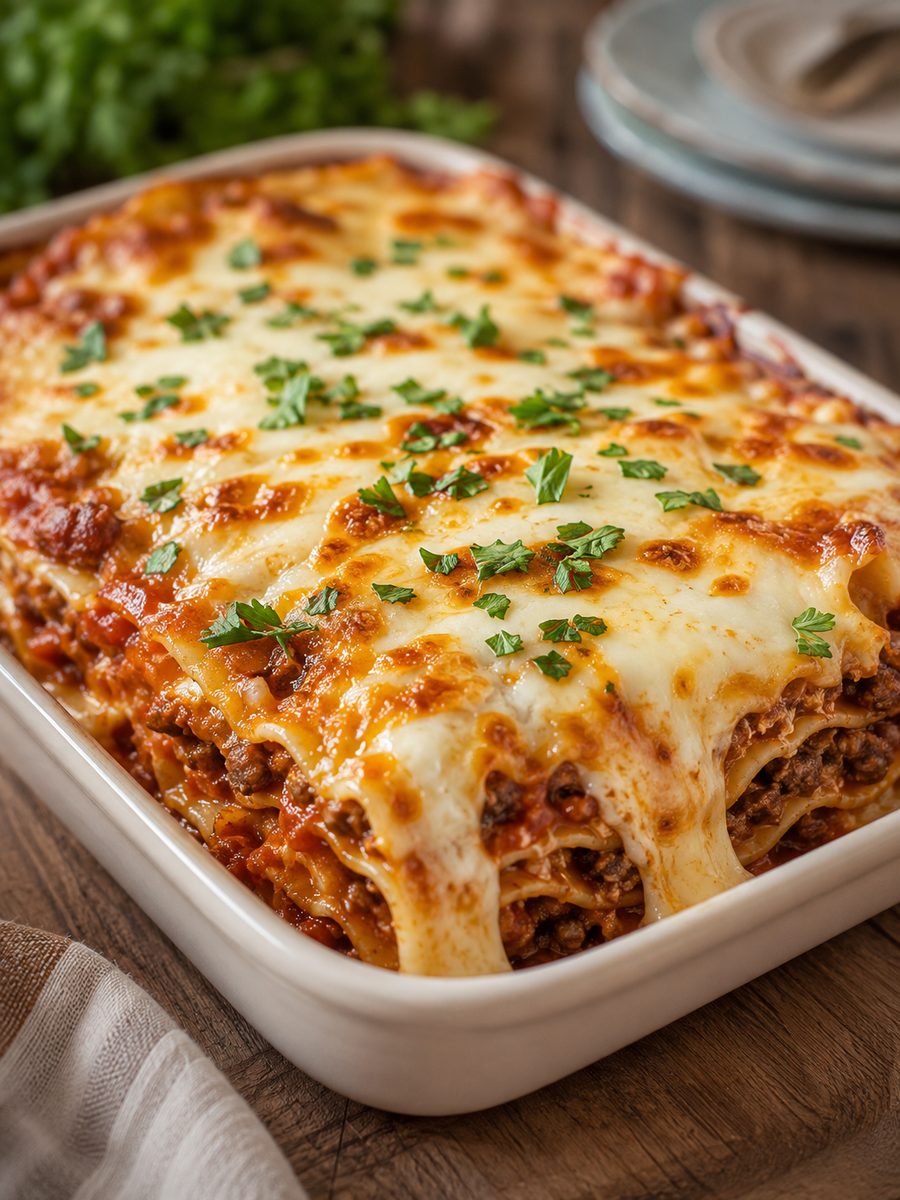

Lasagna is not a difficult dish. It is a patient one. Almost everything that goes wrong with it — the watery pool in the bottom of the pan, the slice that collapses on the way to the plate, the layer of pasta still chalky in the middle — comes from hurrying one of three steps: the sauce, the moisture, or the rest. Granny's version fixes all three by simply refusing to be rushed.
The sauce here simmers for a good hour and a half, uncovered, until it darkens from bright red to a deep brick and the fat separates out at the edges. That is not fussiness. A quick sauce is thin, and thin sauce is what floods the pan. A long one reduces down to something that clings to the noodles and seasons them from the outside in. If you make nothing else from this page, make the sauce and put it on spaghetti.
The other old trick is the egg in the ricotta. It costs you nothing and it is the difference between a cheese layer that sets into a sliceable curd and one that runs out the side the moment you cut in. Beat it in, season the ricotta properly, and give the finished lasagna a full half hour on the counter before serving. It will still be hot. It will just hold together.
Old-Fashioned Lasagna
A Sunday lasagna built the long way — meat sauce simmered until it goes dark and sweet, ricotta bound with egg, and a rest on the counter before it ever meets a knife.
Tap + or − to scale every ingredient
Ingredients
Tick each one off as you go.
- FOR THE MEAT SAUCE
- 30 ml olive oil
- 1 large onion, finely chopped
- 2 carrots, finely chopped
- 4 garlic cloves, minced
- 1 ½ lb (700 g) ground beef (85% lean)
- ¾ lb (350 g) ground pork
- ⅔ cup (170 g) tomato paste
- 3 ⅓ cups (800 g) canned crushed tomatoes
- 1 ⅔ cups (400 g) canned tomato sauce
- 1 cup (240 ml) whole milk
- 2 teaspoons dried oregano
- 2 teaspoons dried basil
- 1 bay leaf
- Salt and black pepper, to taste
- FOR THE RICOTTA LAYER
- 3 ⅔ cups (900 g) whole-milk ricotta
- 2 large eggs
- ⅔ cup (60 g) Parmesan, finely grated
- ⅓ cup (20 g) flat-leaf parsley, chopped
- TO ASSEMBLE
- 500 g lasagna noodles
- 6 ⅓ cups (700 g) low-moisture mozzarella, grated from the block
- ⅔ cup (60 g) Parmesan, finely grated, for the top
Method
- Build the base. Warm the olive oil in a heavy pot over medium heat and cook the onion and carrot with a good pinch of salt for 8 to 10 minutes, until soft and just starting to color. Add the garlic for the last minute only. Carrot is not a garnish here — it is where the sweetness comes from that keeps a long-cooked tomato sauce from turning sharp.
- Brown the meat. Raise the heat, add the beef and pork, and break them up with a spoon. Let the meat actually brown rather than steam: leave it alone for a minute at a time between stirs, and drain off the fat only if there is a genuine pool. Ground beef needs to reach 160°F (71°C) to be safe, and browning takes it well past that.
- Cook out the paste. Stir in the tomato paste and cook it for 2 to 3 minutes until it darkens and coats the bottom of the pot. This one small step is what gives the finished sauce its depth. Raw tomato paste tastes tinny; cooked paste tastes like it has been simmering all day before it has simmered at all.
- Add the milk. Pour in the milk and let it bubble away almost completely before the tomatoes go in. It looks wrong and it is the oldest trick in the book — the dairy tenderizes the meat and rounds off the acidity of the tomatoes. Then add the crushed tomatoes, tomato sauce, oregano, basil and bay leaf.
- Simmer low. Bring to a bare bubble and leave it uncovered for 1 hour 30 minutes, stirring every 20 minutes or so. It is ready when it has gone from bright red to deep brick, a spoon dragged through the middle leaves a track, and a little fat pools at the edge. Fish out the bay leaf and season firmly with salt and pepper.
- Mix the ricotta. Beat the eggs into the ricotta with the Parmesan, parsley, half a teaspoon of salt and plenty of black pepper. Taste it. Unseasoned ricotta is the single most common reason a homemade lasagna tastes flat in the middle no matter how good the sauce is.
- Layer it. Heat the oven to 375°F (190°C, fan 170°C). Cook the noodles 2 minutes short of the package time and lay them flat on a towel. Spread a thin layer of sauce in a 23 x 33 cm pan, then build: noodles, ricotta, mozzarella, sauce — three times over. Sauce goes on top, never ricotta, and finish with the last of the mozzarella and the Parmesan.
- Bake covered, then bare. Cover with foil tented so it does not touch the cheese, and bake for 45 minutes. Uncover and give it another 20 to 25 minutes, until the top is blistered and brown and the sauce bubbles slowly at the edges rather than sloshing.
- Rest it. Take it out and leave it on the counter for a full 30 minutes before cutting. This is not optional and it is not about temperature. The layers are still liquid when it comes out of the oven; resting is what sets them. Cut it too soon and you will serve a very good soup.
Make the meat sauce a day ahead if you can. Overnight in the refrigerator does something to it that no extra hour on the stove will — the flavors settle and marry, and assembly the next evening takes twenty minutes flat.
Tips for a lasagna that slices
Grate the mozzarella yourself
Pre-shredded cheese is dusted with anticaking starch so it does not clump in the bag, and that same starch stops it melting cleanly. A block of low-moisture mozzarella grated on the coarse side of a box grater melts into proper stretchy sheets. Fresh mozzarella in water is the wrong cheese here — it is delicious and it will flood your pan.
Undercook the noodles on purpose
Pull them two minutes before the package says. They finish cooking in the oven, drinking up moisture from the sauce as they go, and that is exactly the moisture you do not want pooling underneath. Noodles boiled to perfection first go soft and slippery by the time the lasagna is done.
Sauce on top, always
The last layer before the cheese must be sauce, not ricotta. Ricotta exposed to direct oven heat dries out, cracks and turns grainy. A blanket of sauce protects it and gives the mozzarella something to brown against.
Questions, answered
Why is my lasagna watery?
Almost always the sauce, and occasionally the cheese. A sauce that has not reduced long enough carries far too much liquid into the pan, where it has nowhere to go. Simmer it uncovered until it is thick enough to leave a track when you drag a spoon through it. The other culprit is fresh mozzarella packed in water, which releases a surprising amount as it melts — use low-moisture mozzarella grated from a block instead.
Do I have to boil the noodles first?
Not if you use no-boil noodles, but you must give them extra liquid to drink or they stay chalky. With regular noodles, boil them two minutes short of the package time so they finish in the oven. Either way, do not cook them fully first.
Can I make lasagna ahead of time?
Yes, and it is better for it. Assemble the whole thing, cover it and refrigerate for up to two days, then add about 15 minutes to the covered baking time since it goes into the oven cold. You can also freeze it assembled but unbaked for up to three months.
Should I use cottage cheese or ricotta?
Ricotta is the traditional choice and gives a finer, creamier layer. Cottage cheese is a genuine old-fashioned substitute used in plenty of American kitchens and works well if you drain it first, though the texture is looser and more curd-like. Whichever you use, beat in an egg so the layer sets.
How long should lasagna rest before cutting?
A full 30 minutes on the counter. The layers are still molten when the pan comes out of the oven and they need that time to set into something you can lift with a spatula. It will still be plenty hot when you serve it.
From Granny's Pantry
The know-how behind this recipe: